
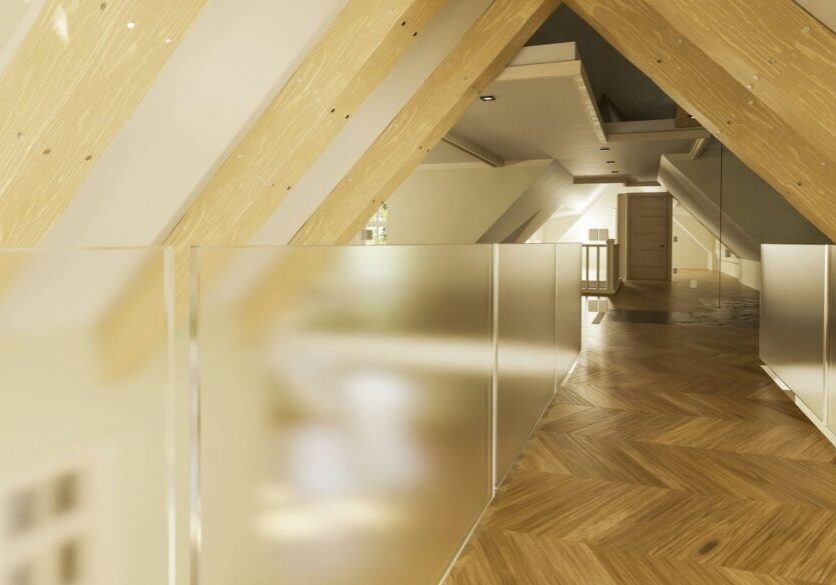
If you’re choosing between frosted and clear glass, the fastest answer is this: clear glass is best when you want maximum openness and daylight, while frosted glass is best when you need to blur sightlines and feel less exposed. Most homes land in the middle with a hybrid approach, like clear panels with a frosted band at eye level. We design indoor glass railings around your layout so the privacy feels intentional, not accidental.
Here’s the catch. “Privacy glass” is not a magic switch. Lighting, angles, and how you use the space decide whether frosted glass feels calming or just slightly cloudy. This guide walks you through privacy reality, light impact, cleaning tradeoffs, and the best-looking ways to mix clear and frosted so you don’t regret the choice after install.
The Quick Decision Guide (Clear Wins, Frosted Wins, Or Mix Them)
You don’t need a design degree to choose correctly. You need to know what you’re solving for, where you feel exposed, and what you can live with day to day. Use the sections below as a shortcut, then keep reading for the “nighttime” and “cleaning” realities people forget.
Choose Clear Glass When Your Priority Is Openness
Clear glass is the right call when your stairwell is a visual feature and you want it to disappear. It keeps sightlines clean, lets light travel through the home, and makes smaller spaces feel bigger. If you love a bright, modern feel, clear glass delivers it with the least visual interruption.
However, clear glass shows what’s behind it. That includes clutter, cords, and wall imperfections. It also shows fingerprints more than any other option. If you have kids, pets, or frequent guests, plan for quick wipe-downs and a handrail strategy that keeps hands off the glass.
Choose Frosted Glass When You Want Privacy At Eye Level
Frosted glass is best when the problem is direct sightlines. Think upper-floor overlooks into living rooms, railings beside a home office, or a stair landing that feels too exposed from the entry. Frosted finishes blur detail, soften the “on display” feeling, and still let light pass through.
The tradeoff is the look. Frosted glass changes the character of the space from crisp and transparent to softer and more diffuse. If you frost too much, the home can feel closed in. The best results usually target the problem angle instead of frosting every panel.
The Most Common “Best Of Both” Answer
For most homes, the sweet spot is a hybrid. You keep clear glass where the view is a benefit, and add frosting only where privacy is needed. That might be a frosted band at eye level, a gradient that fades from frosted to clear, or frosted panels in specific zones like a loft office.
This approach also keeps your options open. If you’re unsure about full frosting, starting with a band or selective panels is easier to live with. It feels deliberate. It also avoids turning your entire stair into a privacy wall.
What Clear And Frosted Glass Actually Mean
A lot of people use “frosted” to mean several different things. Some “frosted glass” is a permanent etched finish. Some is a film applied later. Some is a laminate with a privacy interlayer. The result looks similar from a distance, but the living experience is different.
Clear Glass (And Why Low-Iron Matters)
Clear glass for railings is the standard choice when you want transparency. It keeps the railing visually light and supports that “floating stair” look. In bright homes, it is the cleanest way to keep sightlines uninterrupted.
Low-iron glass is a refinement option. It reduces the green tint you sometimes notice at the glass edges and can make the panel look more colour-neutral. It’s not required, but it can be worth considering when the railing is a centrepiece and you want the cleanest possible look.
Frosted Glass: Etched Vs Film (High-Level Only)
“Frosted” usually means the glass surface diffuses light so you can see shapes, but not details. The two most common routes are etched glass (a permanent, factory-style finish) and privacy film (an applied layer that can be changed later). Etched typically reads more built-in. Film typically gives more flexibility.
If you want the full breakdown of etch, film, tints, and hybrid privacy strategies, use our dedicated glass railings privacy guide and come back here to make the final clear vs frosted decision.
The Privacy Reality Check (Angles And Lighting Decide Everything)
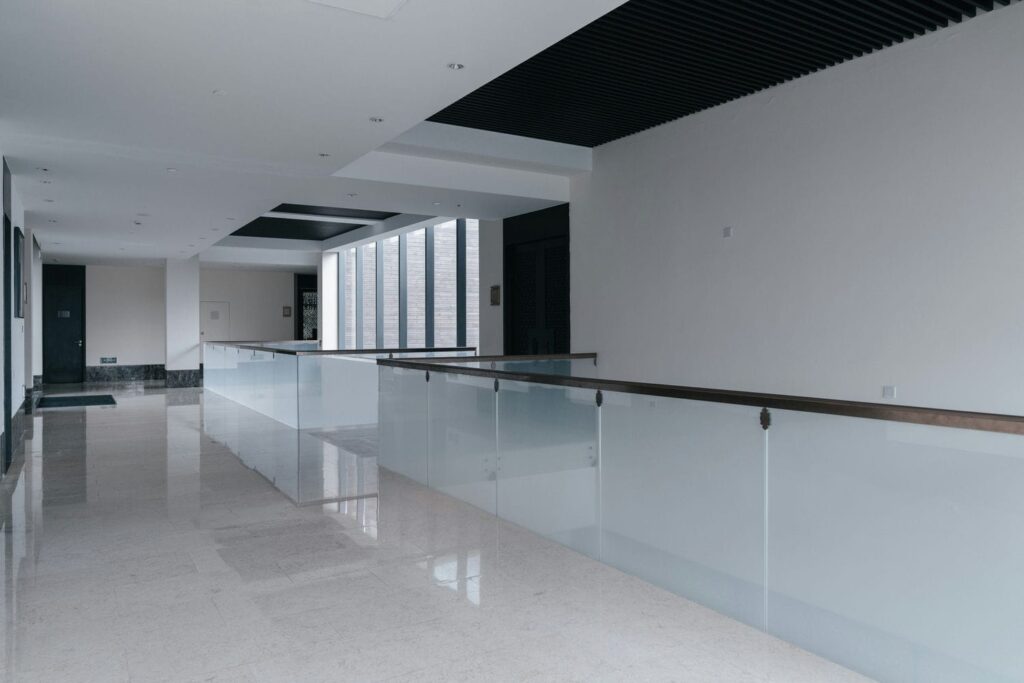
Privacy is not only about glass appearance. It’s about what people can see from the most common positions in your home. If you don’t map those positions, it’s easy to spend money and still feel exposed.
Privacy Is About Where People Stand And Sit
Most privacy discomfort happens at eye level. That’s why a frosted band can be more effective than frosting the entire panel. The view from a couch up to an upper landing is different than the view from a front door into a stair. The same glass can feel private in one direction and not private in another.
Walk your home and test the lines. Stand at the entry and look toward the stair. Sit on the couch and look up to the overlook. Stand at the top landing and look down. Those three vantage points usually tell you whether you need full frosting, a band, or selective panels.
Here’s The Catch: Night Lighting Changes The Game
At night, the brighter side usually “wins.” If you’re brightly lit inside and it’s dark outside, you’ll still see silhouettes and movement through frosted glass. That doesn’t mean frosted is useless. It means it should be treated as blur and soften, not “blackout privacy.”
This is where hybrid choices shine. A band at eye level can block the most uncomfortable view while keeping the top of the panel open. You can also pair privacy glass with smarter lighting placement so you’re not backlighting the exact areas you want to conceal.
When A Mix Strategy Works Better Than Full Frost
Full frosting is best when you consistently need separation, such as a loft bedroom edge that faces a living room. But many homeowners only need privacy in one slice of the view. A mix strategy lets you target that slice without changing the entire personality of the railing.
The easiest mixes are banding and selective panels. Banding solves eye-level discomfort. Select panels solve specific “bad angles,” like a railing section aligned with a desk or a bedroom doorway. It’s the most controlled way to get privacy while preserving the reason you wanted glass.
Light And Space (What You Gain, What You Give Up)
If your home feels dark, clear glass is almost always the right baseline. If your home feels exposed, frosting can help, but you want to avoid killing the sense of openness that makes glass appealing in the first place.
Clear Glass Keeps The Room Bigger
Clear glass doesn’t visually divide your space. That matters on stairs and landings because those areas already have hard edges and vertical lines. Clear panels reduce visual noise, so your eyes travel farther and the home feels larger.
This is especially noticeable in smaller foyers and open staircases. Clear glass keeps the architecture as the focus instead of the railing. If you’re investing in premium finishes, clear glass lets those finishes show.
Frosted Glass Diffuses Light Instead Of Blocking It
Frosted glass still lets light through, but it changes the quality of that light. Instead of crisp beams and strong shadows, you get softer diffusion. Some homeowners love that because it feels calmer and reduces harsh glare. Others feel it makes the space less sharp and modern.
The trick is coverage. A full frosted panel can make a landing feel more enclosed. A frosted band can provide privacy while keeping the top clear, so the space still reads open and bright.
Glare And Screen Use (A Hidden Benefit Of Frosting)
If you work from home near an overlook, glare matters. Clear glass can reflect light sources in ways that amplify screen glare, depending on window placement. Frosted or tinted finishes can soften reflections and make work zones more comfortable without adding blinds everywhere.
This is a practical reason to use frosting selectively. A panel section facing a desk can be lightly diffused while the rest stays clear. You solve the real problem without changing the whole railing.
Cleaning And Smudges (Be Honest Before You Choose)
Glass railings look premium when they’re clean. They look tired when they’re smeared. The best choice is the one you’ll actually maintain without resenting it.
Clear Glass Shows Fingerprints And Touch Points
Clear glass shows fingerprints. That’s the most common downside, and it’s not negotiable. If people touch the panel face, you’ll see it. The good news is that it’s easy to wipe, and most homeowners handle it with a microfibre cloth during normal cleaning.
Design can reduce how often this happens. A good handrail strategy keeps hands on the rail, not the glass. Hardware placement can also reduce “grab points” near corners and transitions where people instinctively reach out.
Frosted Glass Hides Some Marks, But Can Show Oils And Streaks
Frosted glass can hide some fingerprints because the surface diffuses light. However, it can show oily smears and streaks differently than clear glass. Some frosted finishes make oils look like dull patches until cleaned properly. It’s not maintenance-free. It’s just a different maintenance pattern.
This is another reason to avoid full frosting unless you truly need it. If only one sightline is a problem, treat that problem area. Keep the rest clear so the railing keeps its crisp look and cleaning stays simple.
Hardware Choice Affects How Often Glass Gets Touched
Low-profile hardware can help with cleaning, but only if it’s paired with the right handrail and layout. If the design encourages people to grab the glass, you will see it, regardless of finish. If the design guides hands to a rail, the glass stays cleaner longer.
If you’re trying to reduce touch points and keep the metal minimal, read our glass railings hardware guide before you finalize your finish.
Design Options That Split The Difference (The Best-Looking Hybrids)
When people regret frosted or clear, it’s usually because they chose one extreme when they actually needed a blend. Hybrids solve the “privacy vs openness” conflict with less compromise.
Frosted Bands At Eye Level
A frosted band is the most common hybrid because it solves the most common privacy problem. It blocks direct sightlines at the height where people look, while keeping the top of the glass open. That keeps the home feeling bright and modern.
Band height should be chosen based on how you use the space. A seated view from a couch is different than a standing view from an entry. The band should be tested with real sightlines, not guessed from a standard measurement.
Gradients, Patterns, And Select Panels
Gradients soften the transition between private and open. Instead of a hard line, the glass fades from frosted to clear, which can look more natural in warm interiors. Patterns can also work if they match your interior style, but keep them subtle. Loud patterns can date quickly.
Selective panels are the most controlled approach. Frost the panels facing a home office or bedroom zone. Keep the rest clear. This approach often delivers the most premium look because it reads like a purposeful design, not a blanket privacy fix.
Tie It Back To Overall Interior Design
Your finish should match your home’s design language. Sharp minimal interiors often suit clear glass with a crisp band. Warmer interiors may suit softer diffusion or gradients. Hardware finish, handrail profile, and glass layout all combine to create the final “feel.”
If you want help deciding which hybrid looks best in real homes, use our glass railings design guide for layouts, finishes, and glass configurations.
Glass Type Still Matters
Frosted vs clear is a finish decision. But the glass still needs to be the right safety type and thickness for your layout. That choice affects weight, stiffness, and how the railing feels under normal use.
Safety Glass Basics: Tempered Vs Laminated
Tempered and laminated glass are both used in railing systems, but they behave differently. Laminated glass includes an interlayer that can help the glass hold together if it breaks. Tempered glass is designed to break in a safer pattern. Which one makes sense depends on the location, the mounting system, and the performance goals. You can learn more about the differences on this helpful article.
Edge Finishing And “Premium” Look
Clear glass shows everything. Frosted glass still shows sloppy transitions. If you want the railing to read premium, the details matter: polished edges, consistent reveals, straight lines, and clean corner handling.
This is also where “minimal” can look cheap if it’s done poorly. A capless system with uneven lines looks worse than a simple capped system done cleanly. The right choice is the one that’s executed precisely in your home.
How To Choose In 5 Steps (No Guessing)
Most “wrong choices” happen because people pick from photos, not from lived reality. This five-step method is simple, but it prevents regret.
Step 1: Map The Sightlines That Bother You
Walk your home and identify the viewpoints that feel exposed. Start with the entry, the living room seating area, and the top landing. Write down where the discomfort happens, not where you think it should happen.
This step keeps you from over-frosting. Many homes only need privacy on one section of railing, not everywhere.
Step 2: Decide If You Need Blur Or Full Separation
Frosted glass usually provides blur, not full separation. If your goal is to reduce the feeling of being watched, blur is enough. If you need to conceal specific activity or a private room edge, you may need stronger privacy or a different strategy.
If you expect “no silhouettes ever,” you’ll be disappointed. Plan for how the space behaves at night, not just at noon.
Step 3: Choose Clear, Frosted, Or Hybrid By Zone
Zone your home. Stairs and main landings often benefit from clear glass. Overlooks into private rooms often benefit from frosting. Office zones often benefit from bands or selective panels. Treating each area based on use creates a better result than a one-rule decision.
This is the step where you decide whether to frost all panels, only the problem panels, or only an eye-level band.
Step 4: Confirm Handrail And Hardware So People Don’t Touch The Glass
If you choose clear glass, plan for fingerprints. If you choose frosted, plan for smear patterns. Either way, the best fix is to keep hands on the rail, not on the glass. That means a comfortable, well-placed handrail and hardware that supports the movement path.
This is also where low-profile hardware helps. It can reduce visual clutter and reduce accidental touches when transitions are clean.
Step 5: Review Samples In Your Actual Lighting
Lighting changes everything. Review your finish choices in the daytime and at night. Look at your space with interior lights on and curtains open. Then check again with lights off in adjacent rooms. The “privacy feel” can swing significantly.
If you can, hold sample pieces near the actual viewpoints that bother you. That is more useful than any showroom photo.
Safety And Ontario Code Considerations
You can’t “finish” your way into safety. Whether the glass is clear or frosted, your railing is still a guard. It must perform as a guard.
A Guard Is Still A Guard
Frosting does not change the requirement for a properly designed and installed guard. The system still needs appropriate height, openings, and strength based on Ontario Building Code intent. Finish choices should never be used to hide damage, gaps, or poor hardware decisions.
If you want the official provincial reference, Ontario’s Building Code regulation is published on e‑Laws here.
Stair Visibility And Family Use
A railing should help people navigate, not confuse them. Over-frosting can reduce visual cues on stairs, especially for guests, children, and older adults. A clean handrail line and clear top edges often improve comfort while still delivering privacy where needed.
If your main concern is family use, hybrid strategies are usually the safest-looking and safest-feeling option. You keep visibility where navigation matters most and add privacy only where sightlines feel intrusive.
Get Privacy And Light Right Before Glass Is Cut
Clear vs frosted isn’t a trend choice. It’s a sightline and lighting choice. When you decide based on real viewpoints and real cleaning habits, you get a railing that feels right every day, not just on install day.
We help you choose the right glass finish as part of a complete system, including hardware and handrail strategy. GTA Railings brings 15+ years of experience, railings made in Canada, and a certified and insured team, backed by a 2-year warranty on materials and workmanship. If you want a clean result without guesswork, start with our indoor glass railings service and book a consultation.
Frequently Asked Questions
Yes. Frosted glass usually diffuses light rather than blocking it, so spaces can stay bright while details are blurred. The room can feel softer, but not necessarily darker.
It can blur views, but night privacy depends on lighting. Bright interiors can still show movement and silhouettes through frosted glass. For many homes, a band or selective panels works better than full frosting.
Clear glass shows fingerprints more obviously. Frosted glass can hide some prints, but it may show oily smears or streaks differently. Either way, you should plan for routine wipe-downs.
A band is often the best balance. You get privacy at eye level while keeping the space open above and below. It also avoids making your entire stair feel closed in.
Yes. Mixing panels by zone is one of the best ways to get privacy without losing the open feel. It also tends to look more intentional than frosting every panel equally.
No. A guard still has to meet Ontario Building Code intent for height, openings, and strength. Frosting is a finish choice, not a compliance workaround.
Not harder, but different. Frosted surfaces can show oils and streaks in a different way than clear glass. Soft cloths and non-abrasive cleaners are the safe baseline.