
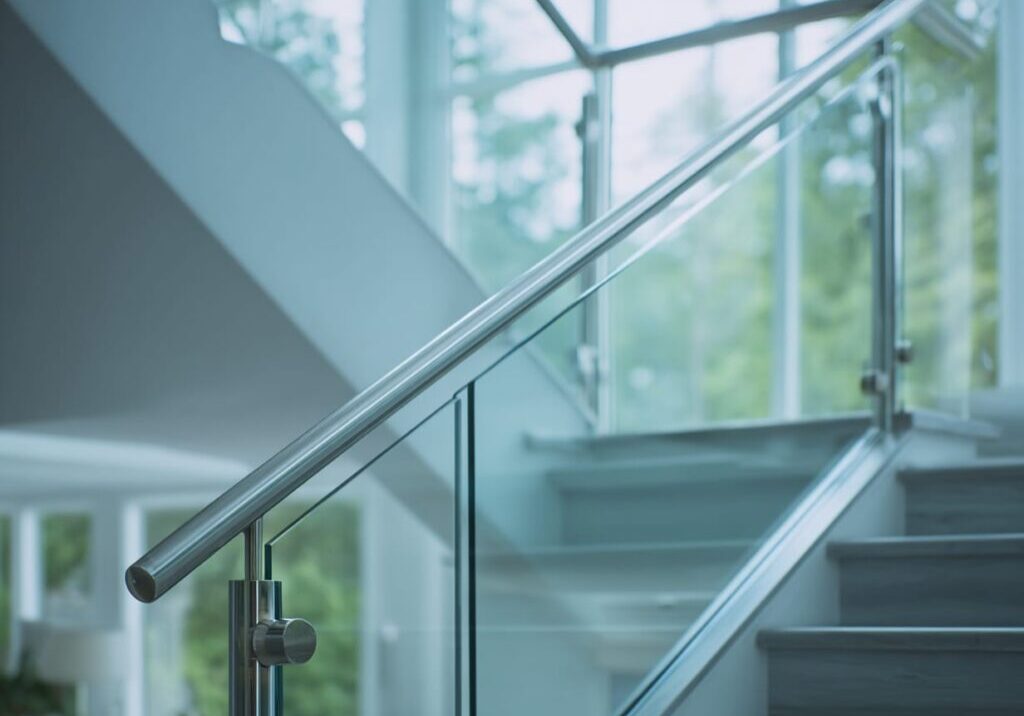
You have three reliable handrail paths for indoor glass: a slim top-cap on the glass, a separate wall-mounted rail, or a side-mounted post rail. Choose a graspable profile (round, oval, or a softened rectangle), keep it continuous on stairs, and place brackets so the rail feels solid in your hand. If you want the full system overview, take a look at our indoor glass railings service.
Most homes can make any of these options work. The real decision is comfort and habit. Pick the rail your family will reach for every time, then confirm the details against Ontario Building Code basics during design.
Because a guard prevents falls and a handrail guides hands, the top rail on a glass guard can sometimes do both jobs. The catch is graspability. If that top edge isn’t easy to hold, add a dedicated handrail and you’ll gain daily comfort without losing the glass look.
Quick Answer: Your Best Handrail Options (30-Second Summary)
For minimal lines, a top-cap rail integrates neatly with the glass and may double as the stair handrail when it’s shaped and sized for a firm grip. On tighter stairs, a wall-mounted handrail is often the most comfortable because hands naturally track the wall side; it also keeps fingerprints off the glass. If you love a frameless look but want a defined grasp point, a side-mounted rail on discreet brackets preserves the crisp glass edge while feeling sturdy.
Profiles matter more than you think. Round and oval rails feel intuitive for all ages. Eased rectangles look modern and still work if edges are soft and dimensions are comfortable. Keep the handrail continuous and return the ends. Those simple choices please inspectors and protect sleeves from catching.
Handrail Types For Indoor Glass Railings
Top-Cap Rail Integrated With Glass
A top-cap mounted directly on the glass gives you the cleanest sightlines. It reads as one continuous line, which is why modern stairs lean this way. We size and shape the cap so it feels friendly in the hand and solves the stair handrail requirement when possible.
Materials vary. A slim aluminum or stainless cap keeps the profile small with a tidy shadow line. Wood warms up the glass and softens the visuals in open-concept spaces. The practical catch is comfort and continuity. If a cap is too square or too wide, it may not function as a true handrail on stairs. We radius edges, refine height transitions, and test grips before finalizing hardware.
Top-caps shine when you want one gesture to do two jobs. They also simplify cleaning because you touch the rail, not the glass edge. For broader design context, review the shapes and finishes that pair well with caps in our post on design options for indoor glass railings.
Separate Wall-Mounted Handrail
A wall-mounted rail is the quiet workhorse. On narrow or steeper runs, hands naturally drift to the wall side. A dedicated rail there puts the grip exactly where people reach, especially kids and aging parents. Because it’s off the glass, daily fingerprints drop and you clean faster.
You can keep it discreet with a small-diameter stainless or powder-coated aluminum rail, or add warmth with wood. We focus on bracket layout first. Hitting solid structure matters, and keeping the rail a consistent distance from the wall avoids knuckle rub. Returns at landings finish the look and keep clothing from catching.
This option pairs well with a cap that looks great but isn’t truly graspable. You keep the minimalist glass line while giving everyone a comfortable handhold. Families often prefer this split strategy as safety for little hands is a priority.
Side-Mounted (Post Or Bracket) Handrail Beside Glass
Side-mounted rails thread the needle between minimal and tactile. The rail rides just off the glass on compact brackets or posts, so you keep the frameless edge while adding a strong, obvious grip. Round stainless or powder-coated aluminum works well here; the consistent diameter feels predictable and looks intentional.
The key is bracket spacing and alignment through turns. We plan the layout so elbows don’t bump the glass, and we maintain a steady clearance between rail and panels. With laminated glass guards, side-mounted rails avoid loading the top edge and can feel even more solid.
This approach suits homes that want a gallery-like look without sacrificing daily ease. It also adapts well to complex stair geometry. We coordinate bracket positions with panel joints so the whole system reads as one clear line.
Profiles And Grip: What Actually Feels Good
Round And Oval Profiles
Round and oval rails are the most intuitive. Your hand closes naturally, and the shape stays comfortable whether your palm is large or small. On stairs with a lot of traffic, they reduce hesitation and promote a confident rhythm up and down.
They also make bracket placement simpler because you don’t fight orientation. A soft-brushed stainless finish hides touch marks, while powder coat keeps the line matte. In wood, a clear or light stain keeps the rail visually light against glass.
Eased Rectangle And “Soft-Square”
Eased rectangles offer a contemporary look without sharp corners. When edges are radiused and the thickness is kept modest, they feel almost as friendly as round. Many homeowners choose a soft-square wood rail to warm up a very modern space.
We watch two details: edge softness and overall thickness. If the rail is too wide and flat, it becomes a shelf rather than a handle. We bring sample sections to the site so you can feel the difference before we commit.
What To Avoid
Avoid sharp corners and overly flat profiles on stairs. They can look crisp in photos but feel awkward in use. Another pitfall is oversizing. A huge top cap reads heavy and may fail the comfort test. Comfort drives safety, so we design the shape you will actually use every day.
Materials: Wood Vs Stainless Vs Aluminum (And When Each Fits)
Wood brings warmth and quiet touch. It’s forgiving in the hand and easy to refinish after years of use. We seal, sand, and ease edges so fingerprints wipe away and sleeves glide. Wood pairs well with both top-caps and separate rails, especially when you want contrast against clear glass.
Stainless steel is the minimalist’s friend. It gives a crisp line that plays well with modern stairs and open mezzanines. Brushed finishes reduce glare and hide prints. In high-traffic homes, stainless earns its keep because it tolerates bumps and daily cleaning without changing colour.
Powder-coated aluminum offers light weight, stable colour, and low maintenance. It’s ideal when you want the performance of metal but prefer a deep matte tone. We colour-match hardware to keep the look consistent. If glass make-up is still a decision, see how handrail hardware interacts with pane thickness in our dive into tempered vs laminated glass for interior railings.
At-A-Glance Table: Handrail Types Vs Use Case
When you’re comparing options, start with how you use the stairs, not just how they look. The table below summarizes the fit for common scenarios.
Handrail Options:
| Handrail Type | Best For & Look | Pros & Considerations |
| Top-Cap on Glass | Minimal lines, open views; seamless appearance | Pros: Can double as the handrail; least visual clutter. Considerations: Must be graspable; edges require a soft radius. |
| Wall-Mounted | Narrow or steep stairs; family-friendly; discreet | Pros: Strong, predictable grip; keeps glass cleaner. Considerations: Adds a second line on the wall. |
| Side-Mounted / Post | Frameless look but with a defined grasp; modern style | Pros: Solid feel; preserves glass edge. Considerations: Brackets need precise layout and proper blocking. |
Code Basics
Ontario’s Building Code focuses on outcomes: a continuous, graspable handrail along stairs, proper clearances from walls, and returns at ends. Guards stop falls at open edges; handrails help you move safely. A single top rail can sometimes satisfy both roles, but only if its height, profile, and continuity align with the rules. Read the provincial overview here (Ontario Building Code, O. Reg. 332/12).
Inspectors evaluate real sites, not just drawings. They confirm the handrail is easy to hold, runs continuously through turns, and returns neatly to a wall or post. On landings and balconies, guard height is the focus. We design and document to OBC so approvals go smoothly.
Municipal teams implement the Code in day-to-day permits and inspections. If your project is outside Toronto, the same principles apply through your local building department.
Choosing The Right Option For Your Home
Start With Traffic, Hands, And Habit
Who uses these stairs most? Small kids, guests, or aging parents all benefit from a handrail they can find without looking. Round or oval profiles set everyone up for success. On busy stairs, we prioritise a rail that people naturally reach for over one that only looks sleek in photos.
We also think about daily rhythms. If your dominant traffic hugs the wall, a wall-mounted rail will feel right. If people walk the centre line to keep views open, a top-cap or side-mounted rail may be the better guide.
Fit To Stair Width And Wall Conditions
Narrow stairs reward a wall rail because it doesn’t intrude into the walking space and gives your hand a predictable path. In wider runs or open floating stairs, a cap or side-mounted rail preserves the glass edge and keeps the sightline clean.
Structure matters. We locate brackets over solid blocking or structure and keep fasteners compatible with your wall type. Coordinating stud locations and hidden services early prevents surprises on install day.
Match Aesthetic And Maintenance
Wood adds warmth and takes to refinishing well after years of use. Stainless and aluminum keep things crisp with easy cleaning. If you’re replacing old pickets, this is also the moment to weigh broader maintenance differences – our comparison of glass vs wood pickets explains when glass simplifies life long-term.
Installation Notes We Sweat (So You Don’t)
We start with support. Brackets land on structure or on rated anchors sized for your wall type. Then we map consistent spacing so the rail feels solid all the way up, not stiff in some spots and bouncy in others. Returns at both ends protect sleeves and look finished.
Transitions get special care. Where flights change direction, we keep the handrail continuous, match mitres, and soften any corners. On glass, we coordinate hardware with panel joints so everything reads as one system. All details are built to OBC and documented for inspection.
Finally, we check the “feel.” A rail can meet code and still feel off. We test the grip and clearance during layout so the handrail is truly comfortable in daily use.
Costs And What Moves Them
Three things push cost: material, complexity, and site conditions. Wood is usually the most economical to start and can be refreshed later. Stainless and powder-coated aluminum add durability and finish options but raise hardware costs slightly.
Complexity means length, turns, and transitions. Each corner introduces fittings and precise mitres. Bracket count and blocking also scale with length. Site conditions matter too. Floating stairs, angled walls, and tight basements take more careful layout and time.
Integration choices matter. A top-cap that doubles as a handrail can simplify hardware, while a separate wall rail adds a little labour but increases comfort. We’ll price both so you can see the trade-offs clearly.
Common Mistakes To Avoid
The biggest mistake is picking a flat, hard-to-grip profile for stairs. It might look sleek, but people won’t use it. Another is skipping returns at rail ends, which can snag clothing and draw inspector comments.
Bracket spacing is another oversight. Too wide and the rail will flex; too tight and it looks busy. Finally, owners sometimes rely on a cap that isn’t actually graspable. When in doubt, pair a beautiful cap with a discreet wall rail and you get the best of both.
FAQs
Often on stairs, yes – unless the glass top-cap is continuous and truly graspable. We design both options and confirm the final detail against OBC during planning.
Round and oval feel natural for most hands. Eased rectangles also work when thickness is modest and edges are soft. We bring sample cuts so you can try them.
Yes. Wood top-caps and wall rails pair well with glass. We seal, size, and fasten carefully to control seasonal movement and avoid squeaks.
It can feel cool at first, but with a rounded profile the grip is secure. Brushed finishes hide fingerprints and offer consistent traction.
Sometimes. If the height, shape, and continuity align with OBC. We’ll verify the detail and, if needed, add a discreet wall rail.
For narrow stairs or heavy traffic, yes. It places a predictable grip along the path people already take and keeps the glass cleaner.
They check for continuity, graspability, clearances, returns, and guard requirements per OBC. We build to those points and provide documentation. For official references, see Ontario’s Building Code overview and regulation text.
GTA’s Trusted Experts for Code-Compliant, Canadian-Made Handrails
Ready to choose a handrail that looks right and feels secure? We’ll help you pick a profile your family will actually use, then install it to the Ontario Building Code. GTA Railings brings over 15 years in the GTA, Canadian-made components, certified and insured crews, and a 2-year warranty on materials and workmanship. Start with our indoor glass stair railings overview, then book a quick consultation.