
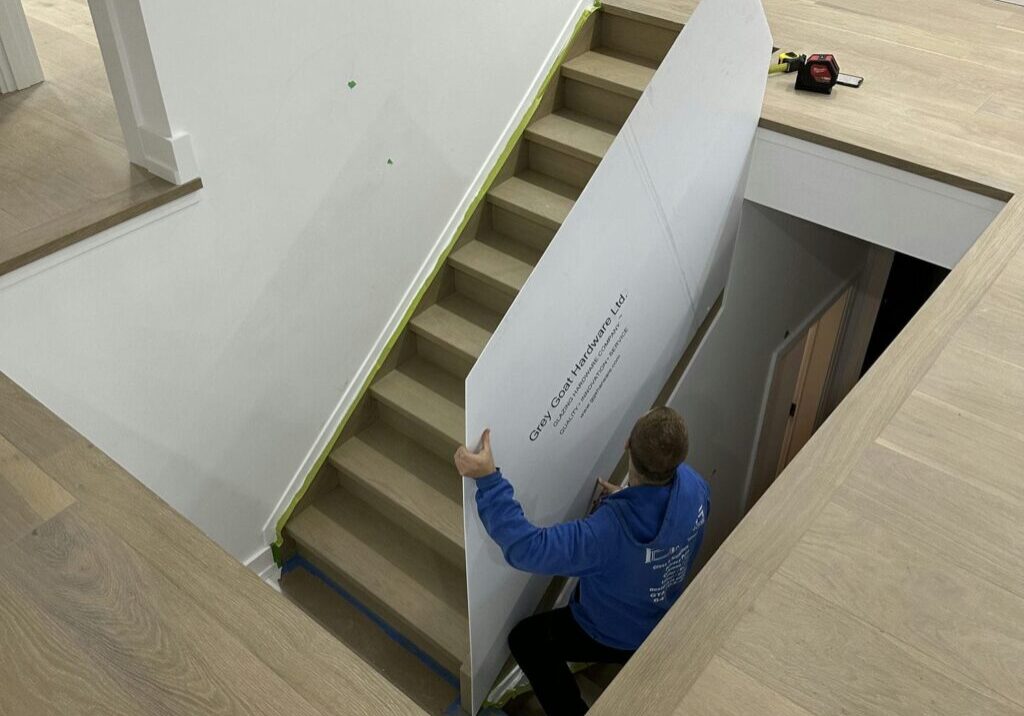
If you want a clean, solid result, the process matters as much as the glass. Here’s the fast version: we review your layout, confirm the system, template when finishes are ready, fabricate the glass, then install and do a final fit check. This is how we keep lines straight, corners clean, and gaps consistent on our indoor glass railings.
Glass is custom. That’s the whole point, and it’s also why rushing early steps usually causes headaches later. A good process protects you from rework, delays, and the “why does this look bulky?” compromises that happen when decisions get made too late.
What Templating Means (And Why It’s The Make-Or-Break Step)
Templating is the step where final, real-world measurements are captured so your glass is made to the finished conditions of your stairs and landings. Think of it as moving from “rough sizing” to “this panel must fit here, exactly.”
This is where premium installs separate themselves. A clean glass railing is basically a collection of tight, consistent reveals. Templating is how you get those reveals without forcing trims and filler pieces later.
Here’s The Catch: Templating Too Early Creates Problems
Templating too early is the most common way to create fit issues. Stair nosings get changed, flooring thickness gets revised, drywall is skimmed, trim profiles change, and suddenly the “final” numbers are no longer final.
That doesn’t mean you can’t plan early. You should. It means the physical template needs to happen when the surfaces that control the glass location are settled. Good timing here prevents expensive “close enough” fixes later.
What Needs To Be Finished Before We Template
You don’t need the whole house finished. You do need the finishes that define the glass boundaries locked in. That usually means final tread/nosing details, confirmed finished-floor thickness, and clarity on where the railing starts and stops.
If you’re mid-reno and unsure what’s “final enough,” that’s normal. We’ll tell you exactly which items must be confirmed before templating so you don’t template twice or fabricate to conditions that will change.
Our Process In 6 Steps (From Measure To Final Install)
Step 1: Site Visit And Layout Review
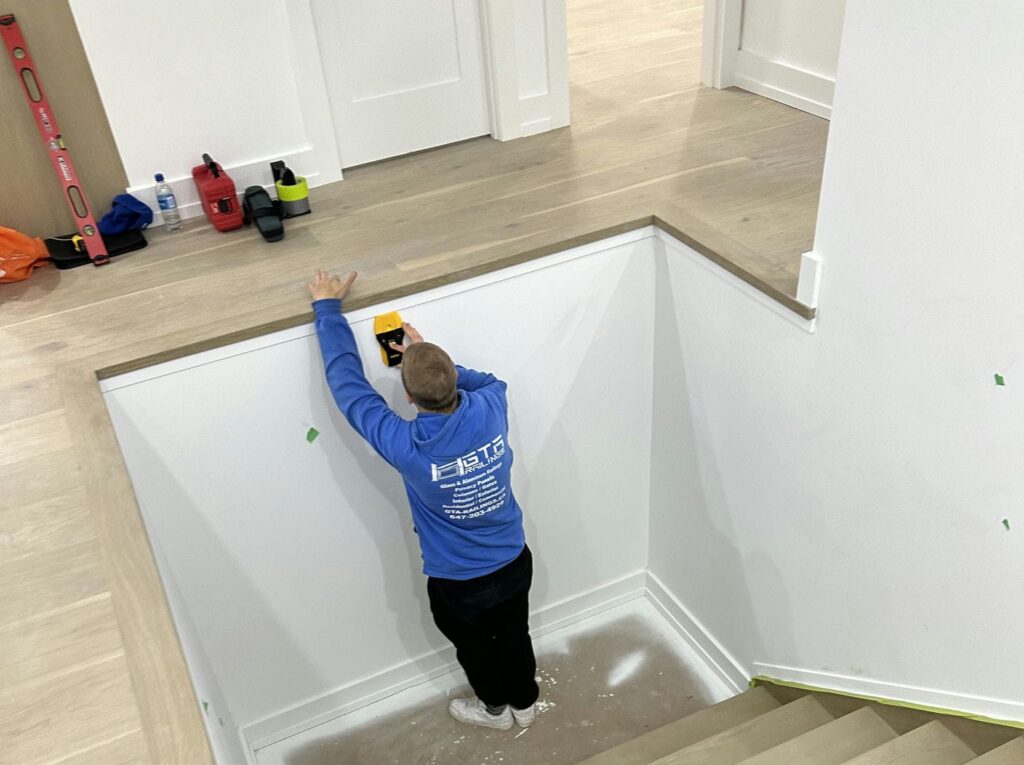
We start with a site visit to understand the layout, the edge conditions, and how people move through the stairs and landings. This is where we spot common constraints like tight clearances, tricky corners, and areas where a different mounting approach will look cleaner.
You’ll also get practical direction here. For example, if a landing edge has a tight wall return, we’ll talk through how that affects glass breaks and where you want seams to land so the end result looks intentional.
Step 2: System Selection
Before glass is made, the system needs to be chosen. Hardware and handrails affect glass sizing, edge clearances, and how rigid the railing feels. This is why “we’ll decide the top cap later” often turns into last-minute compromises.
If you’re deciding between channels, standoffs, clamps, or other low-profile approaches, use our glass railings hardware breakdownto understand what changes on stairs versus landings before you lock anything in.
Step 3: Templating And Final Measurements
Once the key finishes are confirmed, templating captures the final reality. This includes exact runs, angles, landings, wall returns, and transition details. This is also where we confirm how seams and corners will look from the main viewpoints in your home.
Templating is about more than numbers. It’s about buildability. We’re making sure the glass can be fabricated and installed cleanly, without forcing ugly cover plates or awkward trims just to make it “fit.”
Step 4: Fabrication
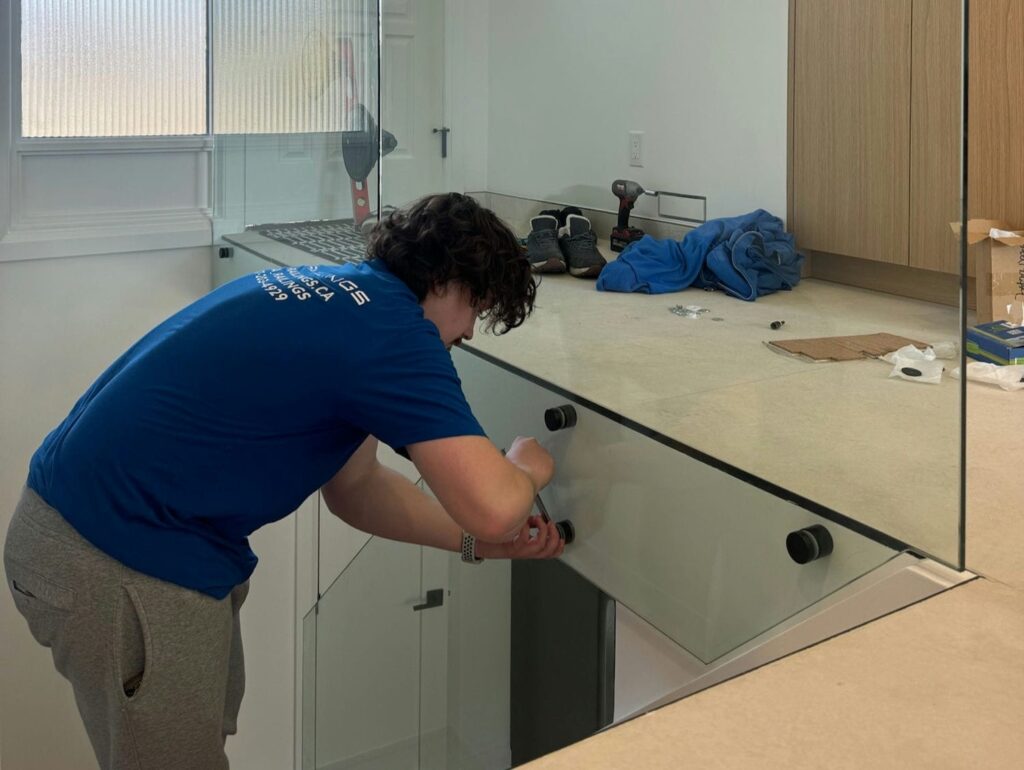
After templating, the glass is fabricated to spec. Edges are finished, holes and notches (if required by the selected system) are prepared, and hardware is staged for installation. The goal is a smooth install day where the work is about alignment and finishing, not improvising.
Fabrication timing depends on spec choices and complexity. A simple run can be straightforward. A multi-level stair with tight corners, mixed finishes, or a complex handrail plan will naturally require more coordination and production planning.
Step 5: Installation Day
Installation day is where careful prep pays off. The work typically includes setting base hardware, installing and aligning the glass, completing handrail details, and finishing transitions so everything reads clean. In a finished home, the goal is controlled work zones and clean movement paths.
There will be normal jobsite realities like noise and localized dust depending on how anchoring is done. That said, the end result should not feel like a renovation project inside your house. A good install feels organized and deliberate.
Step 6: Final Fit, Safety Checks, And Handover
At the end, we confirm fit and alignment, check hardware seating and rigidity, and make sure the system functions as a guard in real use. This is also where we walk you through basic care and what “normal” looks like for your system so you know what to expect.
We keep this practical. The handover is about clarity: how to clean the glass, how to avoid scratching hardware, and what to watch for over time without turning your railing into a maintenance burden.
What Affects Timeline (And Why Some Jobs Take Longer)
Site Readiness And Finish Sequencing
The biggest driver is readiness. Templating depends on final conditions. If flooring thickness changes, stair nosings are reworked, or trim profiles shift after templating, you can end up needing re-templating or design adjustments.
This is why we push sequencing conversations early. You don’t need to rush. You need to lock in the few items that determine final glass location so the rest of the process stays smooth.
Hardware Complexity And Layout
Some layouts are simple: straight runs, clean landings, and predictable returns. Others involve multi-angle corners, tight wall returns, and a handrail strategy that needs to look seamless across levels. Complexity isn’t bad, but it does require more coordination.
If you’re still deciding what style fits your home, it helps to pick a direction before the technical work begins. Here’s a solid overview of glass railing layout and design choices that affect complexity and finishing details.
Glass Spec And Safety Choices
Glass spec affects weight, behaviour, and how the system is built as a whole. That includes how it mounts, how it feels when you lean on it, and what hardware choices make the most sense for the span and location.
If you want to understand how tempered and laminated glass differ at home and why that matters to the system, check out our guide here.
What We Need From You
Access, Clearance, And Protecting Finished Spaces
You don’t need to empty your home. You do need a clear, safe work zone around the stairs and landing edges. Move fragile décor, clear trip hazards, and keep pets and kids out of the work area during installation.
This does two things. It speeds up the install, and it reduces risk to your finishes. Most installation problems in finished homes come from tight access and last-minute obstacles, not from the glass itself.
Decisions To Lock In Before Templating
Before templating, lock in the decisions that control glass geometry: handrail approach, hardware style, and where transitions will land. Even small changes can shift seam locations and corner details, which affects how “clean” the final install reads.
Handrails are a common hold-up because they affect both comfort and appearance. If you want to see practical handrail approaches that pair well with glass, use this handrail options guide for indoor glass railings before you template.
Safety And Ontario Code Considerations
Process Supports Compliance, But Code Still Rules
A good process reduces risk, but it doesn’t replace the requirements of a guard. Your railing still needs to meet applicable Ontario Building Code intent for guards, including key factors like height, openings, and strength. We design with those requirements in mind, and project specifics depend on the exact location and conditions.
If you want to reference the official source, Ontario publishes the Building Code regulation on e‑Laws here.
Why “Looks Good” Isn’t A Pass
A railing can look clean and still be wrong if it’s mounted to the wrong substrate or built without the right system choices. That’s why we focus on anchoring, layout, and system selection early, before any glass is cut.
Bottom line: the best-looking glass railing is the one that also feels solid in daily use. That outcome comes from planning, templating, and installing as one coordinated system, not from chasing a photo.
Common Process Mistakes Homeowners Can Avoid
Changing Finishes After Templating
Changing flooring thickness, stair nosings, or trim details after templating is the quickest way to force compromises. Even if the changes seem small, they can shift edges and sightlines in ways that matter for glass.
If changes are unavoidable, the smart move is to pause and reassess before fabrication. It’s far cheaper to adjust a plan than to fight fitment after glass has been made.
Choosing Hardware Before Confirming Structure
Hardware choice should follow structure, not lead it. The most minimal systems often demand the strongest anchoring conditions. If the substrate can’t support that clean option, the “minimal” plan either becomes unstable or becomes bulky with added parts.
This is why we talk through mounting conditions early. You can still get a clean look, but the cleanest solution is the one that fits your home’s realities.
Rushing Decisions On Handrails And Edge Details
Handrails and edge details are where regret hides. The most common complaint we hear is, “I didn’t think the cap would look that big,” or, “I didn’t realize the handrail line would change the whole stair.”
Taking a little extra time at the selection stage protects the result. Once the glass is fabricated, you can’t “un-cut” a panel to suit a new handrail plan.
Get A Clean Install By Getting The Process Right
A clean glass railing install isn’t luck. It’s sequencing, templating at the right time, and building the glass and hardware as one system so you don’t get last-minute compromises. If you want a result that feels solid and looks intentional, the process is what protects you.
GTA Railings brings over 15 years of experience, railings made in Canada, and a certified and insured team, backed by a 2-year warranty on materials and workmanship. If you’re planning stairs or an open landing, start here and book a consultation through our indoor glass railings service page.
Frequently Asked Questions
Templating happens after key finishes and dimensions are confirmed, so the glass is made to real conditions. If finishes are still changing, templating too early can create fit issues later.
You don’t always need everything finished, but you do need final floor thickness and edge conditions confirmed. If your flooring plan is still moving, it’s better to wait before templating.
Fabrication timing depends on glass spec, complexity, and production scheduling. Once selections are finalized and templating is complete, we can confirm a realistic timeline for your project.
Installation typically includes setting mounting hardware, placing and aligning glass panels, completing handrail details, and finishing transitions. Expect normal jobsite noise, and plan for clear access to stairs and landings during the work.
Often yes. The key is confirming the structure and mounting conditions first. From there, we can recommend a system that suits the stair and landing layout.
Many stairs require a graspable handrail strategy, and the cleanest approach depends on your layout and design goals. This is best decided before templating, so the glass and handrail work together.
A guard must meet Ontario Building Code intent for height, openings, and strength, and the applicable requirements depend on the specific context. We design accordingly and confirm key dimensions as part of the project process.