
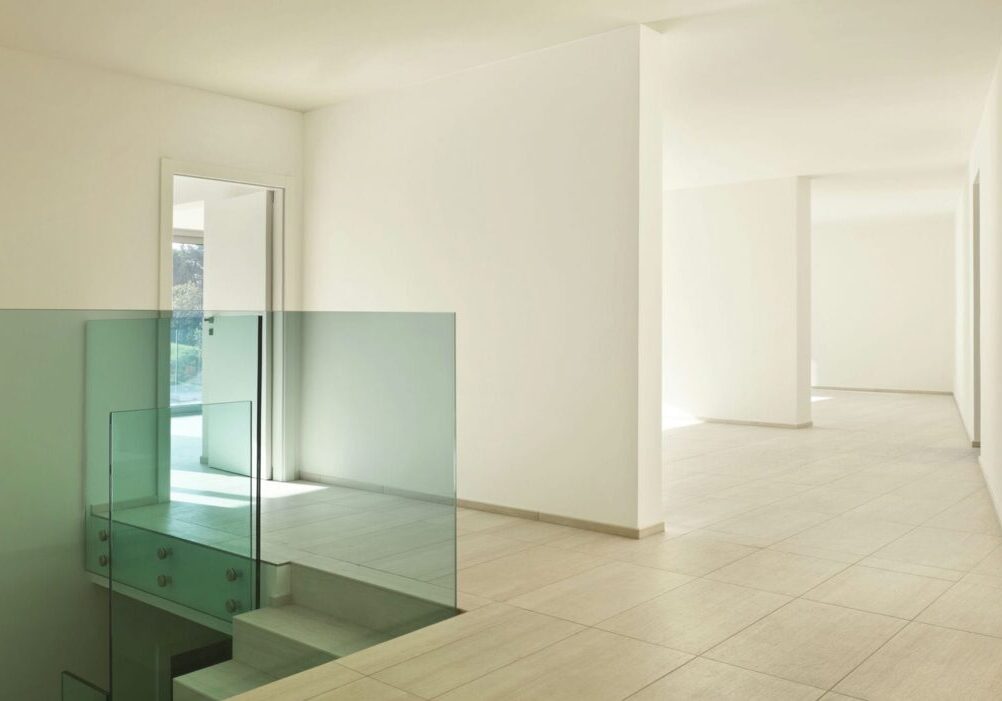
You do not have to choose between feeling exposed and closing your home off with heavy railings. With the right privacy solutions, your indoor glass railings can keep spaces bright while softening or blocking the views that make you uncomfortable. In this guide, we break down how etch, film, and tints work, where each makes sense, and what to think about before you change your glass. If you are planning new indoor glass railings, we can design privacy into the system from day one so it looks intentional and stays OBC‑aware.
Most homeowners we speak with want the same balance: keep natural light, keep the modern look, and remove the “fishbowl” feeling in key spots like lofts, bedrooms, and home offices. Privacy solutions are about controlling sightlines, not just making glass cloudy. Once you see how bands, patterns, and different glass types behave, it becomes much easier to choose a finish that fits how you actually live in the space.
Start Here – What You’re Really Solving For
Light, Lines, And Sightlines
Privacy issues with glass railings usually show up after you have lived with them for a while. During the day, the brightness and openness feel great. At night, when lights are on and the outside is dark, you suddenly feel like you are on display. The goal is not to undo the openness but to soften or block very specific angles: that direct view into a loft bedroom, the line of sight to a home office screen, or the feeling of being watched from an entry below.
Think of it as drawing a privacy “map” on your railings. You might only need a frosted band at eye level, or a tinted glass panel in front of a desk area. The rest can stay clear. When we design interior glass railings, we look at where people stand, sit, and walk so the privacy treatment lands at the right height and depth instead of randomly covering the whole panel.
Common Privacy Pain Points With Indoor Glass
Certain layouts are repeat offenders. Open‑to‑below spaces often mean bedrooms or offices overlook living rooms. Stairs close to the front door can leave you feeling exposed whenever someone is at the entry. Railings on upper floors might align perfectly with neighbouring windows. All of those scenarios benefit from targeted privacy instead of a blanket solution.
Curtains or solid walls can solve privacy, but they undermine the reason you chose glass in the first place. The better move is to use glass‑specific tools like etch, films, and tints to protect views only where it matters. That way, your home still feels open, but the “bad angles” are softened, blurred, or blocked.
Privacy Options For Existing Indoor Glass Railings (Retrofit Friendly)
Frosted And Patterned Privacy Films
Privacy film is the easiest way to add privacy to existing indoor glass railings. It is a thin layer applied to the surface of the glass that can create frosted, gradient, or patterned effects. For many homeowners, it is the fastest way to test how much privacy they really want before committing to new glass.
Privacy film for glass railings simply means a translucent or patterned layer that obscures detail while still letting light through. Compared to ripping out panels, it is low‑disruption and can be focused on just a few panels or even a single problem spot. The trade‑off is that film depends heavily on surface prep and installation quality; poor installs show bubbles, seams, or lifting corners over time.
Gradient Bands, Stripes, And Custom Graphics
One of the biggest strengths of film is precision. You do not have to frost the whole panel. You can create a band at seated eye level along an overlook, a central stripe around 1,000–1,200 mm high for standing privacy, or a soft gradient that fades from frosted at the bottom to clear at the top. This keeps daylight and views where you want them while hiding areas that feel too exposed.
Patterns can be tuned to your interior style. A clean horizontal band works well in modern homes. Softer organic patterns or linen‑style films can pair nicely with more traditional trim. When we plan privacy, we also think about handrail and cap positions so bands line up with key features instead of fighting them. For more on how the rail profile affects the visual line of the system, see handrail options for indoor glass railings.
When Film Isn’t The Right Answer
Film is not always the best long‑term solution. If your panels are in a high‑wear area where people and objects frequently brush against the surface, edges can slowly become vulnerable. In very humid or hot spots, cheap films may age faster or discolour. Film also does not correct structural issues, damaged glass, or hardware problems.
If you know you want a permanent privacy look and are already considering new railings or major changes, etched or laminated privacy glass deserves a closer look. These options build privacy into the glass itself, avoid edges that can peel, and usually offer a more “built‑in” aesthetic that feels like part of the architecture, not an add‑on.
Privacy Options When Replacing Or Upgrading The Glass Itself
Acid‑Etched And Sandblasted Privacy Glass
When you order new glass panels, you can choose etched or sandblasted finishes that permanently change the surface. Acid‑etched glass is treated to create a uniform, satin‑like finish that diffuses light and blurs shapes. Sandblasted glass does something similar using mechanical abrasion. Both give you a soft, high‑end privacy effect that works beautifully in main living areas and bedroom overlooks.
The upside is permanence and consistency: there are no film edges, and the look does not depend on adhesives. Cleaning is still simple, as long as you use soft cloths and standard non‑abrasive cleaners. The catch is that it is a commitment. Once glass is etched, you can’t “un‑etch” it. That is why we help you think carefully about where you want clear glass, where you want frosting, and how those choices line up with how you use each floor.
Tinted Glass And Laminated Privacy Interlayers
Tinted glass changes the colour and brightness of what you see through the panel. Light grey or bronze tints, for example, can soften views and reduce contrast without hiding everything. Laminated privacy interlayers take this further by bonding a translucent or coloured layer between two sheets of glass. The privacy lives inside the glass unit itself, so it will not peel or scratch off the surface.
These solutions are ideal when you are already installing new safety glass and want privacy “baked in.” A white or opal laminated interlayer, for example, is great for bedroom mezzanines or spa areas where you want strong separation but still want daylight.
Matching Privacy Level To Room Use
Not every railing needs the same level of privacy. A gallery overlooking a family room might only need a frosted band to make people below feel less “looked down on.” A loft office could benefit from a higher band to hide screens from visitors but stay open above. In contrast, a railing right beside a bed or soaking tub might call for nearly full‑height privacy.
We typically think in zones instead of products. High‑privacy zones include bedrooms and baths. Medium‑privacy zones cover offices, reading lofts, and work‑from‑home nooks. Low‑privacy zones include main stairs and hallways where you just want to reduce the feeling of being on stage. Once you place your spaces on that spectrum, it becomes much clearer which mix of etch, film, and tint makes sense.
How Privacy Treatments Affect Safety, Code, And Performance
Guard Heights And Openings Still Come First
Privacy solutions do not replace the basics of a safe guard. Your railing still needs to meet Ontario Building Code requirements for height, strength, and openings, no matter how opaque or patterned the glass is. Privacy film or etch should never be used to “cover up” non‑compliant openings, low guard heights, or damaged glass. Those issues need proper engineering and hardware, not cosmetics.
When you add films or order etched or laminated panels, the treatment should sit within the glass boundaries and avoid interfering with shoes, gaskets, or clamps. That way you can still see the panel edges, hardware condition, and any damage that might appear over time. If you want to review the official rules around guards in Ontario, you can consult the Ontario Building Code on the provincial e‑Laws website.
Slipperiness, Glare, And Visibility On Stairs
Privacy has to coexist with safe navigation. At stairs and landings, people rely on visual cues like the top edge of the guard, the handrail line, and contrast at the stair nosings. Heavy frosting in the wrong spot can blunt those cues and make it harder to judge depth, especially for kids, older adults, or guests who are not familiar with the house.
On the positive side, properly placed frosting and tints can reduce glare on screens in nearby offices or media rooms. A tinted panel facing a large window, for example, can cut down the harsh reflections that make TVs or monitors hard to see. If your main concern is children on or near stairs, balance your privacy ideas with practical kid‑safe details like continuous handrails and solid guard design. For a deeper dive into that side of the equation, you can read our guide to childproofing indoor glass railings in homes.
Design Ideas – Balancing Privacy With A Clean, Modern Look
Minimalist Bands For Modern Homes
If your home leans modern, privacy bands are a strong option. A clean horizontal strip of frost at eye level can protect views from outside or below while keeping the top and bottom of the panel crystal‑clear. This approach keeps the room feeling open and avoids the “frosted shower door” look that can happen when you overdo coverage.
We often align bands with the top cap or handrail to keep the composition tidy. On multi‑floor overlooks, bands can line up from level to level so the system looks thought‑through, not patched together. For more design ideas around hardware, glass layouts, and how to mix clear and privacy panels across your home, see our guide to design options for indoor glass railings.
Softer Patterns For Warm Or Traditional Interiors
In a warm or more traditional interior, hard‑edged privacy bands can feel a bit too strict. This is where softer patterns and textures work better. Linen‑style films, subtle geometric patterns, or lightly textured etch strike a balance between privacy and warmth. They diffuse views yet still play nicely with wood floors, painted trim, and soft furnishings.
The key is to avoid patterns that fight your architecture. Vertical elements can echo nearby door casings or panels, while gentle, random patterns fade into the background. When we look at privacy options in these homes, we pay attention to existing lines and material tones so the glass feels like a natural extension of your interior, not a bolt‑on modern feature.
Zoned Privacy For Multi‑Level Spaces
Multi‑level spaces often need different privacy treatments at different points. A top‑floor overlook that faces bedrooms might get a stronger privacy treatment, while a mid‑level landing only needs a modest band. Areas near stairs leading to a basement rec room might be left clear to maintain a sense of connection.
Treating your home like a series of zones lets you avoid one‑size‑fits‑all decisions. It also keeps material choices efficient: you might use laminated privacy glass only where it matters most and stick with clear or lightly frosted panels elsewhere. The result is a home that feels layered and intentional instead of either overexposed or overfrosted.
Costs, Lifespan, And Maintenance Of Privacy Solutions
Film Vs Etch Vs Laminated Interlayer – Cost And Commitment
Every privacy option sits at a different point on the cost and commitment spectrum. Films usually come in at the lowest upfront price and are the easiest to change. They are perfect when you want to try a pattern, respond to a life change (like a new home office), or adjust privacy without changing hardware. The trade‑off is a finite lifespan; eventually, most films will show wear and need replacement.
Etched glass and laminated privacy interlayers cost more to install because they are part of new safety glass. In return, they offer a much more “built‑in” effect and a very long service life. Laminated interlayers, in particular, keep the privacy layer protected between sheets of glass. The best choice depends on how long you plan to stay in the home, how often you change your interior, and whether you are already investing in new railings.
Simple Comparison Table
| Option | Privacy Level / Look | Permanence & Typical Use |
| Frosted / Patterned Film | Adjustable; banded, partial, or full | Retrofit on existing glass; flexible |
| Acid‑Etched Privacy Glass | Soft, uniform diffusion | New panels; long‑term, “set and forget” |
| Laminated Privacy Interlayer | Strong, high‑privacy or tinted look | New railings; high‑sensitivity areas |
Cleaning And Longevity
None of these options eliminate cleaning, but they do change what you notice and how you maintain surfaces. Film‑coated glass should be cleaned with soft cloths and film‑safe cleaners; avoid abrasives and sharp tools that could scratch or lift the edges. Expect to refresh film eventually, especially in high‑touch areas or busy households.
Etched glass cleans similarly to standard glass as long as you use non‑abrasive products. It can sometimes show oils differently than clear glass, but a simple wipe is usually all that is needed. Laminated privacy glass behaves like any other quality safety glass in daily use. As with any railing, occasional visual checks for chips, cracks, or loose hardware are good practice, but the privacy finish itself should not require special treatment beyond sensible cleaning.
Cases Where Wood Or Other Materials Still Win
Heritage Interiors And Matched Millwork
There are still situations where glass, even with privacy treatments, is not the right material. In protected heritage homes or spaces with very strong traditional millwork, wood balusters and classic rail profiles may be more in line with the architecture. Matching existing species, profiles, and stains can matter more than chasing maximum light or a minimalist look.
In those cases, some homeowners accept the extra maintenance of wood as the price of preserving character. Our role is to be honest about the trade‑offs: if your priority is strict heritage fidelity, traditional railings may serve you better than glass. If your priority is light and low maintenance, glass with carefully planned privacy is usually the smarter move.
Tight Budgets Or Strict Short‑Term Plans
Budget and timing also play a role. If you are preparing a home for sale or bridging to a future renovation, you may decide to live with your current railings a bit longer rather than investing in glass right away. A quick paint refresh can make wood look acceptable in photos, even though it will not solve long‑term maintenance.
When you are already planning a larger update, however, privacy‑aware glass becomes more compelling. You can address safety, style, and privacy in one project and reduce future labour. Our job is to help you understand where glass delivers clear long‑term value so you are not stuck repeating short‑term fixes.
How We Help You Get The Right Balance
Choosing the right privacy solution is about more than picking a film or frost sample. You have to weigh how each floor is used, how sightlines feel from above and below, and how much maintenance you are realistically willing to take on. You also need to keep Ontario Building Code guard basics in mind so privacy never compromises safety.
At GTA Railings, we design indoor glass railings with privacy, light, and safety in mind from the start. We look at your layout, listen to how you live in each space, and recommend combinations of glass type, hardware, and privacy treatments that fit your home. With over 15 years in business, railings made in Canada, a certified and insured team, and a 2‑year warranty on materials and workmanship, you get a system that looks intentional and performs. To explore what is possible in your space, start with our indoor glass railings service and book a consultation.
Frequently Asked Questions
In many homes, yes. Frosted and patterned films can be applied to suitable existing panels to add privacy without removing the glass. The key is making sure the glass and hardware are in good condition and that the film is installed properly so edges, seams, and bubbles do not become a problem over time.
Etched glass is permanently treated at the surface during manufacturing, which gives it a consistent frosted appearance that will not peel. Privacy film is a separate layer applied later, which makes it easier to change or remove but more dependent on installation quality. Etch is usually better as part of a new, long‑term system, while film is ideal for retrofits or adjustable privacy.
They can, but they do not have to. Frosted and translucent options scatter light rather than blocking it outright, so rooms can stay bright even when details are blurred. Dark tints will reduce light more, but careful placement and banding can give you privacy where it matters and brightness where you need it.
Films do not replace safety glass or structural design. When used correctly, they are applied to the face of existing guard glass and do not interfere with hardware, seals, or support. It is important to avoid film in areas where it could affect gaskets or clamps and to ensure that the underlying glass already meets code and performance requirements.
Yes. Many homeowners frost the lower portion or a specific band of the glass to protect seated or standing sightlines while leaving the top clear for views and light. The height and coverage of that band should be chosen based on how people use the space, where neighbours or family are likely to see in, and what feels comfortable in real life.
Use soft cloths and non‑abrasive cleaners on all privacy finishes. Avoid scouring pads or aggressive scrapers on etched surfaces, and follow the product instructions for any film. With sensible care, both film and etch can stay clear and attractive for many years.
Privacy treatments do not change the fact that your guard must meet height, strength, and opening rules. They also should not hide cracks or damage that would otherwise be visible. If you are planning a significant change or a full new railing, it is smart to discuss your plans with your installer and, where required, your local building department to confirm permit needs.