
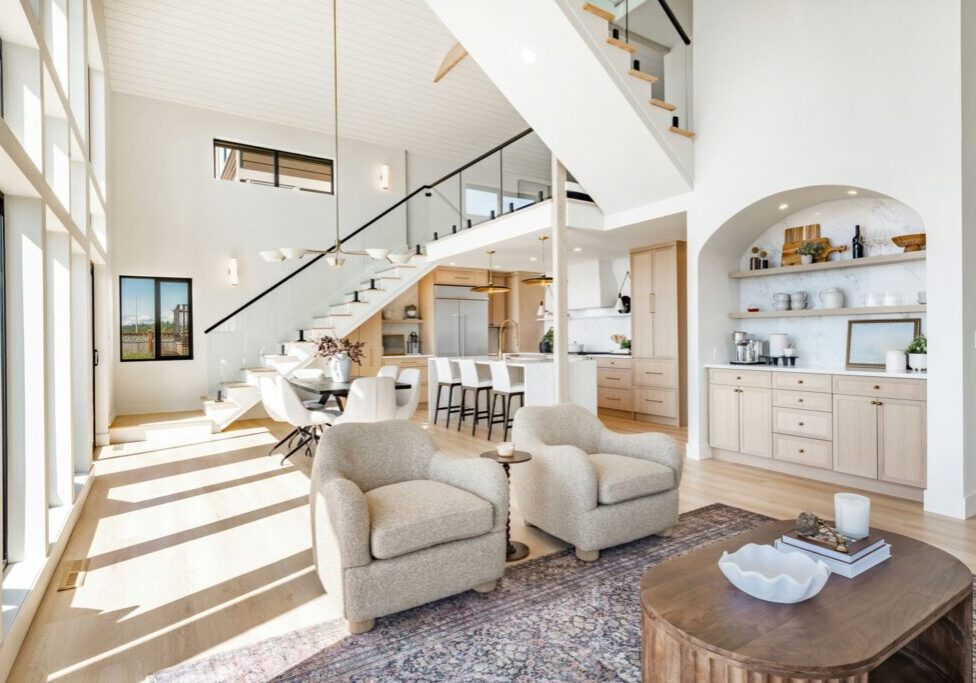
Indoor glass railings work especially well in open-concept homes because they protect stairs and landing edges without visually breaking the room into pieces. They keep daylight moving, preserve long sightlines, and let the layout feel like one connected space instead of several smaller zones stitched together.
That said, glass is not automatically the right answer just because a home is open-concept. These layouts make the benefits more obvious, but they also make the tradeoffs more obvious. Smudges, glare, privacy gaps, and bulky hardware all stand out faster in an open room.
Why Open-Concept Homes Need A Different Kind Of Guard
Open-concept homes rely on visual continuity. That is the whole point of the layout. When the kitchen, dining, living, and stair zones all connect, the railing stops being a side detail and becomes part of the room’s architecture. A heavy guard can interrupt the space even when it is well made.
That is why this topic matters. In a closed floor plan, a bulkier guard might not hurt the room. In an open plan, it can make the whole layout feel more crowded than it is.
What Makes A Railing Open-Concept Friendly
An open-concept-friendly railing is a guard that protects the edge without visually chopping up connected rooms. That is the simplest way to frame the decision.
The practical point is this: the best railing for an open-concept home is not the one with the most detail. It is the one that does its safety job while staying visually quiet.
Sightlines Are The Real Asset In Open Rooms
Sightlines are what make open-concept homes feel generous. You see farther, light travels farther, and the space feels connected even when functions change from one area to the next. A bulky guard interrupts that effect fast.
Glass protects those long views. Instead of forcing your eye to stop at every spindle or post, it lets the stair zone read as part of the room. In real life, that often makes a bigger difference than people expect.
Light Travels Farther When The Guard Disappears
Open layouts often rely on borrowed light. Windows on one side of the floor help the whole level feel brighter because the layout stays visually open. When the stair guard becomes a visual wall, that effect weakens.
Glass does not create more sunlight, of course. What it does is stop the railing from blocking the light you already have. That is one reason it works so well in homes where the stair sits inside the main living zone.
The Biggest Reasons Glass Works So Well In Open Layouts
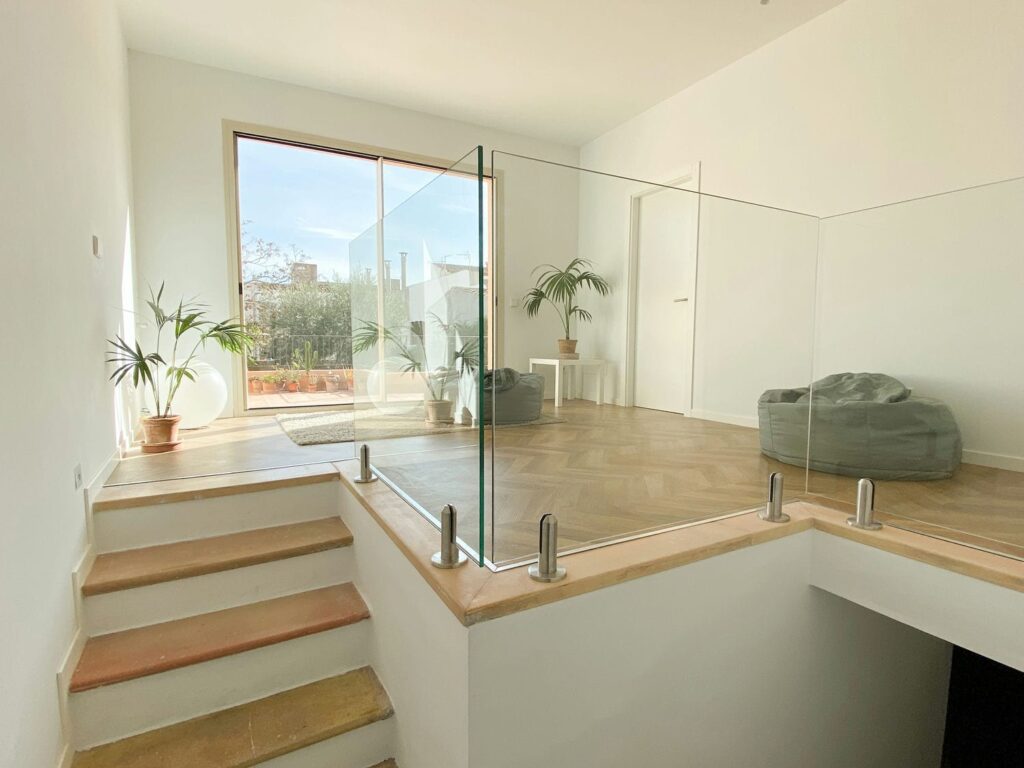
The strongest case for glass in an open-concept home is not “modern style.” It is performance at the room level. Glass keeps the plan feeling connected, supports natural light, and lets the architecture stay visible.
That is why it often feels like the cleanest choice even in homes that are not ultra-modern.
It Keeps The Floor Plan Feeling Connected
Open-concept layouts work because rooms overlap visually. The kitchen does not feel sealed off from the living room. The stair does not feel like a separate corridor. Glass helps maintain that relationship because it protects the edge without creating another visual barrier.
Traditional pickets can still look good, but they introduce rhythm and density. In an open room, that density often reads as clutter, especially when the railing sits right in the middle of the main floor.
It Lets The Stair Design And Interior Finishes Stay Visible
When the stair is exposed to the main room, the railing becomes part of the interior design whether you intend it or not. Glass lets the treads, stringers, floors, and trim stay visible. That matters if you have invested in those finishes and want them to do the visual work.
The right look depends on the room, and the design options for indoor glass railings vary enough that the same footprint can read very differently depending on which direction you take.
It Makes Smaller Open Areas Feel Bigger
Not every open-concept home is large. Many are simply arranged to feel open. In those homes, glass can make a noticeable difference because it removes visual blockage around the stairs and landings.
That does not sound dramatic on paper. In person, it often is. A lighter guard can make the foyer feel less boxed in, make the main floor feel wider, and make the stair feel like part of the space instead of an obstacle inside it.
Where Indoor Glass Performs Best In Real Open-Concept Homes
Glass is not equally valuable in every location. It tends to deliver the most when the stair or landing is already exposed to the room and the railing has the power to either preserve or break the layout.
That is where the “works best” argument becomes real instead of theoretical.
Open-To-Below Landings
Open-to-below landings are one of the clearest use cases for glass. The whole purpose of that overlook is connection between levels. A heavy guard defeats some of that purpose by turning the edge into a visual wall.
Glass keeps the overlook safe while letting the level below stay present. You still get the feeling of a connected vertical space, which is usually why homeowners wanted that feature in the first place.
Stairs Beside Kitchens, Dining Areas, And Great Rooms
When the stair sits beside the main shared spaces, the railing becomes part of the daily backdrop. You see it from the island, from the sofa, from the dining table, and from the entry. In that position, visual quiet matters.
Glass works because it keeps the stair from dominating the room. The line stays light, and the room still reads as one space instead of a collection of barriers and crossings.
Two-Storey Foyers And Split-Level Sightlines
Two-storey foyers and split-level homes often have long view lines that are worth protecting. A glass guard supports that openness instead of interrupting it. This is especially true when the stair is the first thing you see from the front door.
These are also the homes where awkward seams, thick hardware, or clumsy top rails show up fastest. Open sightlines are unforgiving. Good glass looks excellent here. Average glass details do not hide.
The Tradeoffs Open-Concept Homes Make More Obvious

Open-concept homes flatter glass, but they also expose its weaknesses. That is the part many articles skip. If you are going to live with glass in the middle of a bright, shared room, you need the honest version.
This is where the decision gets practical.
Fingerprints And Smudges Show More In Bright, Shared Rooms
Glass is easy to wipe, but clear glass shows fingerprints. In a bright open room, those prints are easier to notice because sunlight, reflections, and longer sightlines all make surface marks more visible.
This is not a reason to reject glass. It is just part of the trade. In many homes, the visual gain is worth it. But if surface marks bother you every day, that lifestyle fit matters more than the showroom look.
Privacy Can Become The Real Issue, Not Light
Many homeowners start by chasing openness, then realize the bigger issue is exposure. A second-floor overlook into the family room, a stair beside a home office, or a landing visible from the entry can feel too exposed once you live with it.
That is where selective privacy usually works better than abandoning glass. A frosted band or selective panels can soften the problem without killing the open feel. Weighing frosted vs clear glass for indoor railings helps clarify where privacy matters most and where full transparency still earns its place.
Here’s The Catch: Open Concept Magnifies Both The Wins And The Weaknesses
Here’s the catch. Open-concept homes make glass look better and bad decisions look worse. Clean sightlines, great. Smudges, awkward hardware, and missed privacy needs, also great at getting your attention.
That is why system choices matter more here than in a closed layout. In an open room, there is less visual clutter to hide bulky details or sloppy planning. The good looks more premium. The weak points look more obvious.
Frameless Vs Supported Glass In Open-Concept Homes
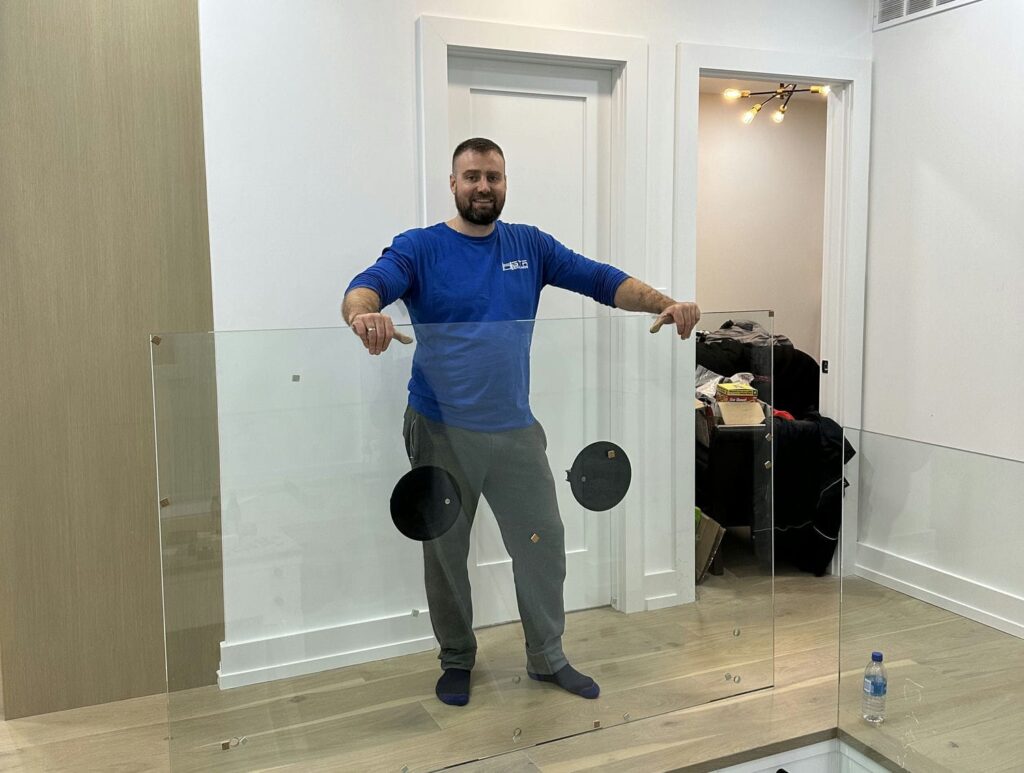
Many homeowners assume open-concept automatically means frameless. Sometimes that is true. Sometimes it is not. The better question is whether the look and the structure are aligned.
That is the difference between a railing that feels intentional and one that feels forced.
Frameless Usually Delivers The Cleanest Open-Plan Look
Frameless or near-frameless systems usually preserve the cleanest sightlines. They keep visible metal low and let the glass do the visual work. In an open-concept home, that often translates into the most seamless look.
That said, frameless is not a magic word. The real tradeoffs between frameless indoor glass railings and supported systems come down to cost, structure, and how the railing feels in use.
Low-Profile Supported Systems Can Still Work Very Well
A low-profile supported system can still look excellent in an open plan. In some homes, it is the smarter move because it gives you most of the visual benefit while being more forgiving around budget, structure, or renovation conditions.
That matters because “works best” does not always mean “most extreme version.” Sometimes the best result is the one that looks open, feels solid, and avoids unnecessary complexity.
Hardware Bulk Matters More In Open Rooms Than People Expect
Hardware is not a footnote in an open-concept home. It sits in full view, often against bright floors, open landings, and long sightlines. A slim base or refined support can disappear. A bulky one can pull the whole railing toward a heavier look.
Choosing the right hardware for indoor glass railings is where a lot of the visual difference between systems actually lives, so it is worth understanding the options before comparing quotes.
Safety And Code Still Apply In Open Rooms
Open-concept planning changes the visual role of the railing. It does not change the fact that the railing is still a guard. It still has to perform like one. That means layout and style decisions have to work with guard and stair requirements, not around them.
This is where a lot of “beautiful” ideas fall apart. Not because glass is wrong, but because people forget that safety and aesthetics are separate jobs that need to meet in one system.
Open-Concept Does Not Change Guard Requirements
An open room does not relax the need for a proper guard at a drop, and it does not remove the need for a real handrail strategy where the stair condition calls for one. The layout may be modern and visually open, but the safety function stays the same.
Ontario’s Current Building Code Reference
The smart move is to stay code-aware without trying to self-engineer the whole system from regulation text. Ontario’s current Building Code regulation is O. Reg. 163/24, which adopts the National Building Code of Canada 2020 with Ontario amendments, and that is the right official source to confirm current rules when needed.
Glass Railing Options At A Glance
Each railing direction shapes an open plan in a different way, and the tradeoffs become easier to weigh when the options sit side by side.
| Option | What It Does In An Open Plan | The Catch |
| Frameless Glass | Preserves maximum light and sightlines | Higher cost, more visible smudges, stricter planning |
| Low-Profile Glass System | Keeps a strong open feel with more forgiveness | Slightly more visible hardware |
| Pickets Or Heavier Guards | Adds visual separation and a more traditional rhythm | Breaks sightlines and makes the stair zone feel heavier |
If openness and daylight are your top priorities, glass usually wins. If you want more visual separation between zones, or you know fingerprints will bother you, another guard style may fit better.
How To Tell If Glass Is Right For Your Open-Concept Home In 5 Steps
A good decision starts with your actual room, not a saved photo. These five steps keep the choice grounded in how the home looks and how you live in it.
Step 1: Map The Sightlines You Want To Protect
Stand at the entry, kitchen, sofa, and top landing. Ask which views make the house feel larger and more connected. Those are the sightlines the guard should protect, not interrupt.
This step often clarifies the decision fast. If the stair zone is central to the room, glass tends to have more upside.
Step 2: Decide Whether You Want Maximum Openness Or Some Visual Screening
Not every open-concept home wants pure transparency. Some need openness with a bit of screening, especially near offices, upper hallways, or overlooks into private spaces.
This is where many homeowners realize the answer is not “glass or no glass.” It is “what kind of glass, and where.”
Step 3: Choose The Glass Look That Matches The Room
Once you know the role of the railing, choose the look. Clear frameless suits very open, light-driven rooms. Slightly more supported systems can work better when structure or budget matters. Select privacy details can help where visibility is the real problem.
The right answer is not the most minimal answer by default. It is the one that fits the room and the way the home is used.
Step 4: Check Your Tolerance For Fingerprints And Wiping
This is the honesty step. If regular wipe-downs feel fine, the maintenance trade is probably worth it. If you know surface marks will annoy you every time the sun hits the railing, factor that in now.
A beautiful railing that irritates you daily is not a smart choice.
Step 5: Compare Quotes By System, Not By Photos
Compare hardware approach, glass type, handrail plan, and how the system is being mounted. Do not compare only the word “frameless” or a rendering.
That is how you avoid paying for a label and receiving a system that does not look or feel the way you expected.
When Indoor Glass Is Not The Best Fit
Glass is not the answer to every open-concept home. Sometimes the room benefits from more visual structure. Sometimes the homeowner’s habits or priorities point somewhere else.
Knowing when not to choose glass is part of making a good choice.
If You Actually Want More Visual Separation Between Zones
Some homeowners use the stair area as a soft divider between living, dining, and entry zones. In that case, a heavier guard may actually support the way the room is meant to feel.
If visual separation is part of your goal, maximum openness may work against you instead of helping.
If Fingerprints Will Irritate You More Than Broken Sightlines
This is not trivial. Some people do not care about the occasional print. Others see every mark and resent it. If you are in the second group, that matters more than any style trend.
A guard should fit your habits, not ask you to change them every week.
If Structure Or Budget Pushes Toward A Simpler System
Some conditions simply favour a less extreme approach. A low-profile supported system may preserve enough openness while being easier to execute cleanly. In other cases, budget may be better spent on a strong, refined system that is not fully frameless.
That is not settling. It is choosing the smartest version of the result you actually want.
Get The Open-Concept Look Without The Guesswork
Indoor glass railings work best in open-concept homes when the system is chosen to support the layout, not just the trend. GTA Railings brings over 15 years in business, railings made in Canada, and a certified and insured team, backed by a 2-year warranty on materials and workmanship. If you want a railing that protects the edge without breaking the room, we are ready to help you plan it.
Frequently Asked Questions
Because they protect stairs and landing edges without visually dividing connected rooms. They preserve light and sightlines better than heavier railing styles, which helps the whole floor plan feel more connected.
Often, yes. They reduce visual blockage around stairs and landings, which helps smaller open spaces feel lighter and less crowded. That effect is especially noticeable when the stair sits in the middle of the main floor.
Not always. Frameless is often the cleanest look, but some homes are better served by low-profile supported systems that keep the room visually open without pushing as hard on structure, budget, or maintenance tolerance.
Selective privacy usually works better than fully closing the railing off. Frosted bands or select panels can preserve openness while softening direct sightlines where the room feels too exposed.
Yes, where the stair condition requires it. Open layout changes the look of the system, not the need for safe stair use and a proper grip line where applicable.
They are easy to wipe, but smudges and fingerprints are more visible in bright shared spaces. Good handrail planning helps reduce glass-touching, which reduces how often those marks show up.
No. The layout changes how the railing feels and what it should look like, but it does not remove the need for a proper guard and, where applicable, a proper handrail strategy.