
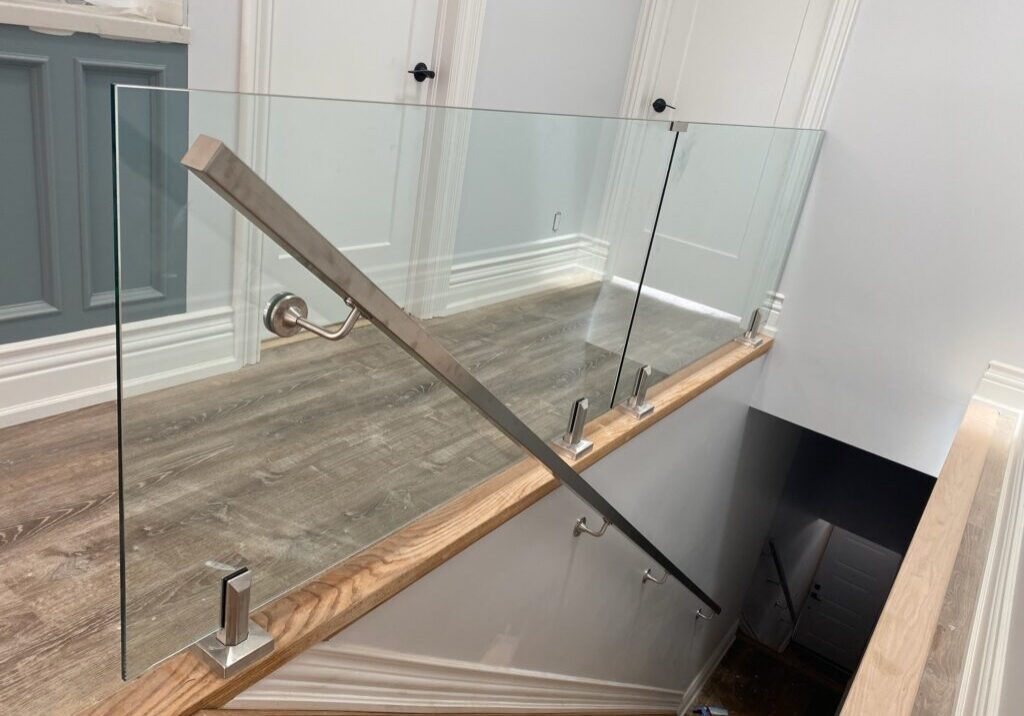
Frameless indoor glass railings give you the cleanest sightlines and the most open look you can get on stairs and landings. The tradeoff is real: they usually cost more, they show fingerprints, and they demand better structure and planning to feel solid.
What “Frameless” Means Indoors
“Frameless” is one of the most overused terms in railing sales. Most people mean “minimal metal.” Some people mean “no posts.” Some people mean “I saw this on Instagram.” If you don’t define it, you can pay for frameless and still end up with a chunky look.
A Simple Definition
A frameless indoor glass railing is a glass guard that reads as mostly glass with minimal visible posts, supported by low-profile mounting hardware (like a base shoe/channel or point supports). It’s “frameless” visually, not literally.
That second sentence is important. Every glass railing needs hardware. The question is how much you see, and where it sits in your sightline.
Frameless Vs Glass Infill (Why The Difference Matters)
Glass infill systems use a stronger visible frame (posts and rails) to do more of the structural work. The glass fills the space between those elements. They can look modern and clean, but they don’t create the same “disappearing edge” that frameless creates.
This difference matters because it changes how the system behaves. Infill tends to feel more constrained and sometimes more forgiving in renovations. Frameless tends to look cleaner, but it puts more demand on hardware, structure, and glass spec.
The Two Common Frameless Looks
Most frameless indoor glass railings fall into two visual families: a base shoe/channel look (glass rising out of a slim base) and a point-supported look (glass held with standoffs or similar hardware). Both can look premium. Both can look wrong if the details don’t match the space.
Hardware placement determines how frameless actually reads on stairs versus landings, and the full breakdown of low-profile choices is covered in our guide to hardware for indoor glass railings, including what changes behind the scenes between each system.
The Pros Of Frameless Indoor Glass Railings
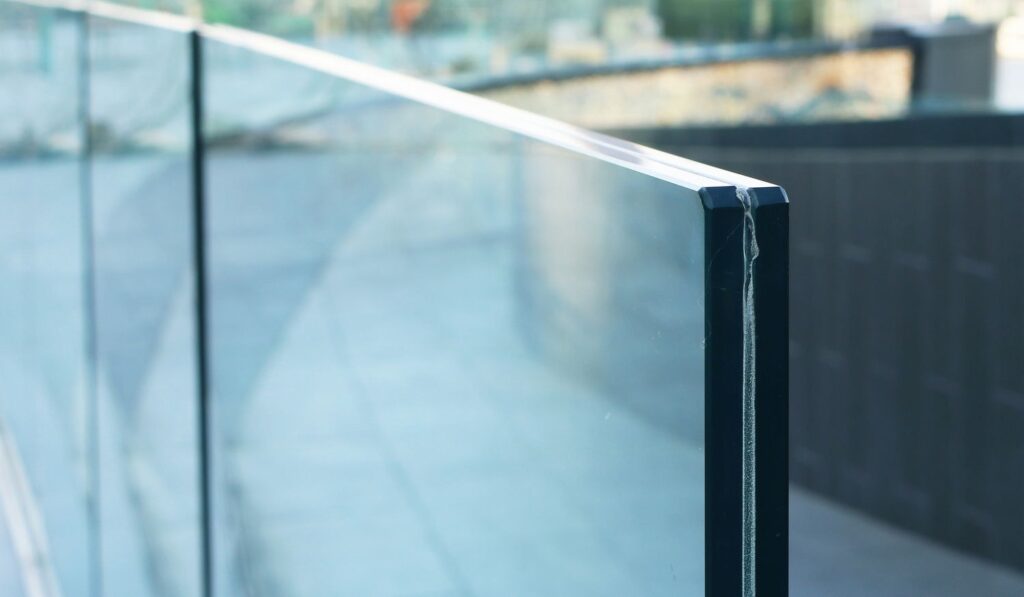
Frameless works because it removes visual noise. When it’s designed well, it makes your stair and landing feel like architecture, not a barrier. That’s the upside you’re paying for.
Just don’t confuse “minimal look” with “minimal work.” The best frameless installs are simple because the planning was thorough.
Maximum Light And Sightlines
The biggest advantage is openness. Frameless glass preserves natural light and long sightlines, which can make a home feel larger and calmer. This is especially noticeable at open-to-below edges, where pickets and posts can visually chop up the space.
If you’ve invested in nice stair treads, flooring, or trim, frameless also stops the railing from stealing the show. Your finishes stay the focus.
Cleaner Design Language (Less Visual Noise)
Pickets create rhythm. Sometimes that’s great. Sometimes it’s busy. Frameless removes that repetition and keeps the lines quiet. That’s why it pairs well with modern interiors and open concept layouts.
It also works in transitional homes where you want one modern element without redoing everything. A frameless railing can modernize the entire stair zone without changing the footprint.
Fewer “Dust Traps” Than Pickets (But Glass Still Needs Wiping)
With pickets, you dust dozens of surfaces. With glass, you wipe a few large surfaces. That’s usually easier, especially around stairs where dust collects fast.
However, glass changes the cleaning reality. You trade dusting for wiping. If you hate seeing smudges, you need to plan for that honestly (we’ll cover it in the cons).
Openings And “Kid Behavior” Can Be Easier To Control
A continuous glass barrier can make it easier to control openings compared to pickets, because you’re not managing dozens of spacing points. The middle of the guard is solid. That can be a practical win for families.
That said, good family outcomes still depend on details: handrail choice, base detailing, and avoiding ledges that invite climbing. Frameless can help, but it doesn’t replace smart planning.
The Cons And Tradeoffs (What You Pay For, Literally And Practically)
Here’s the part most websites gloss over. Frameless looks clean, but it’s less forgiving. The design has fewer visible components to hide problems. If the system isn’t matched to your structure and layout, you’ll feel it and see it.
If you want a “set it and forget it” railing, you need to be honest about whether frameless fits your lifestyle and expectations.
Fingerprints And Smudges Are A Real Downside
Clear glass shows fingerprints. Period. If the stair is high traffic, you’ll notice prints at hand height and kid height. In certain lighting (sunlight or strong interior lights), smudges can pop even when the glass is mostly clean.
You can reduce this by design. A real handrail strategy keeps hands on the rail, not on the glass. Smart hardware placement also reduces “grab points” where people instinctively touch the panel.
It Typically Costs More Than Post Systems
Frameless usually costs more because you’re paying for a system that keeps metal low-profile and relies on tighter tolerances. The glass spec tends to be more demanding, the hardware is more specialized, and the install requires more precision to keep reveals consistent.
You’re not paying for “less material.” You’re paying for a cleaner look that takes more planning and better execution.
Structure And Anchoring Requirements
Frameless systems push more demand into the mounting line. If the substrate isn’t suitable for the hardware approach, you can end up with compromises like bulkier bases, more visible metal, or a system that feels less rigid than expected.
This is why site conditions matter. A great frameless install starts with what you can anchor into, not with what you saw in a photo.
Movement Perception Can Surprise Homeowners
A railing can be safe and still feel more flexible than you expected. That “feel” becomes a quality issue in your mind, even if the system meets performance requirements. Homeowners tend to notice movement more on tall landing guards and long uninterrupted runs.
Good system design manages that perception. Panel sizing, support method, and thickness direction all influence how solid the railing feels in daily use.
Handrail Decisions Can Make Or Break The “Minimal” Look
Many stairs need a graspable handrail strategy. That’s not a frameless problem. It’s a stair reality. But it does affect aesthetics, because a handrail introduces a visible line.
Planning the grip line early is what keeps frameless looking clean rather than like an afterthought, and the practical approaches are covered in GTA Railings’ guide to handrail options for indoor glass railings.
Pros And Cons At A Glance
Use this table as a fast filter. If most of the “catch” column doesn’t bother you, frameless is probably a strong fit. If several items are deal-breakers, a different glass railing style may be the smarter play.
| Decision Factor | What You Gain | The Catch |
| Sightlines / Light | Most open look | Minimal design shows flaws faster |
| Cleaning Reality | Fewer dust traps | Fingerprints and smudges show |
| Cost Direction | Premium “quiet” look | Typically higher cost than posts |
| Structure Demand | Clean installs on good substrates | Less forgiving on weak edges |
| “Feel” (Movement) | Sleek, modern edge | Can feel flexible if mis-matched |
| Handrail Impact | Safe, usable stairs | Handrail must be planned early |
If you’re on the fence, focus on two factors: (1) will fingerprints drive you crazy, and (2) do you need the railing to feel rock-solid on long runs. Those two issues cause most regrets.
When Frameless Is The Right Call
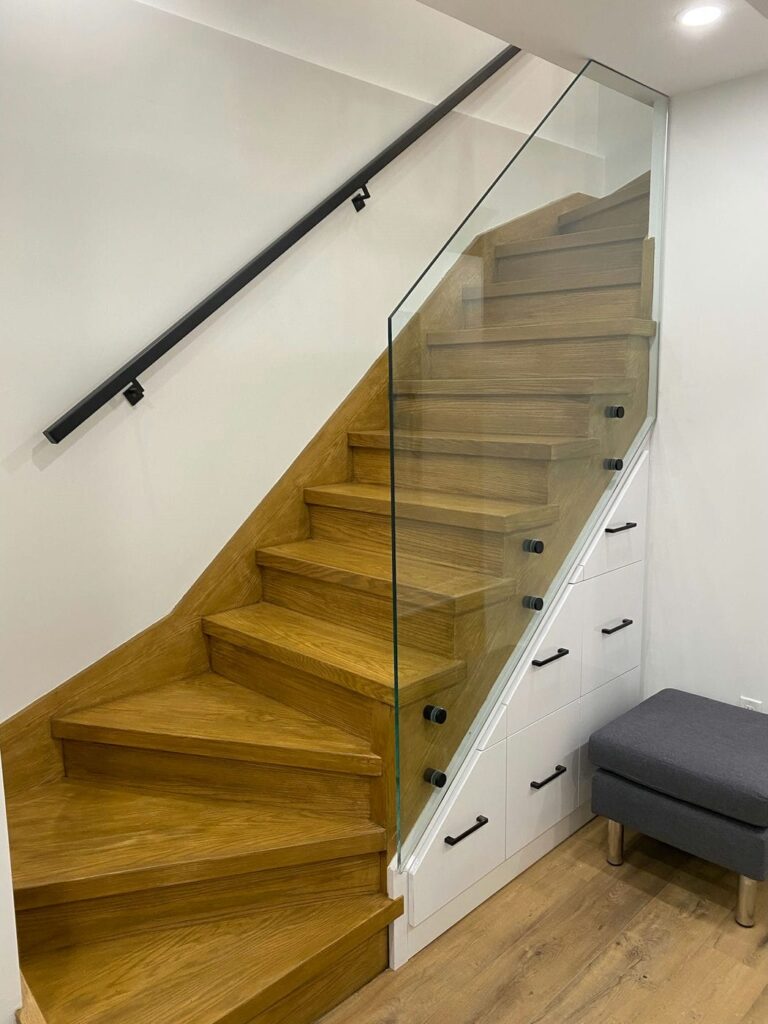
Frameless is a great choice when the stair and landing are a visual feature and you want the railing to disappear. It’s also a strong option when you’re trying to keep a smaller home feeling open and bright.
The key is choosing frameless for the right reasons, not because it’s trendy.
Feature Stairs And Open-To-Below Landings
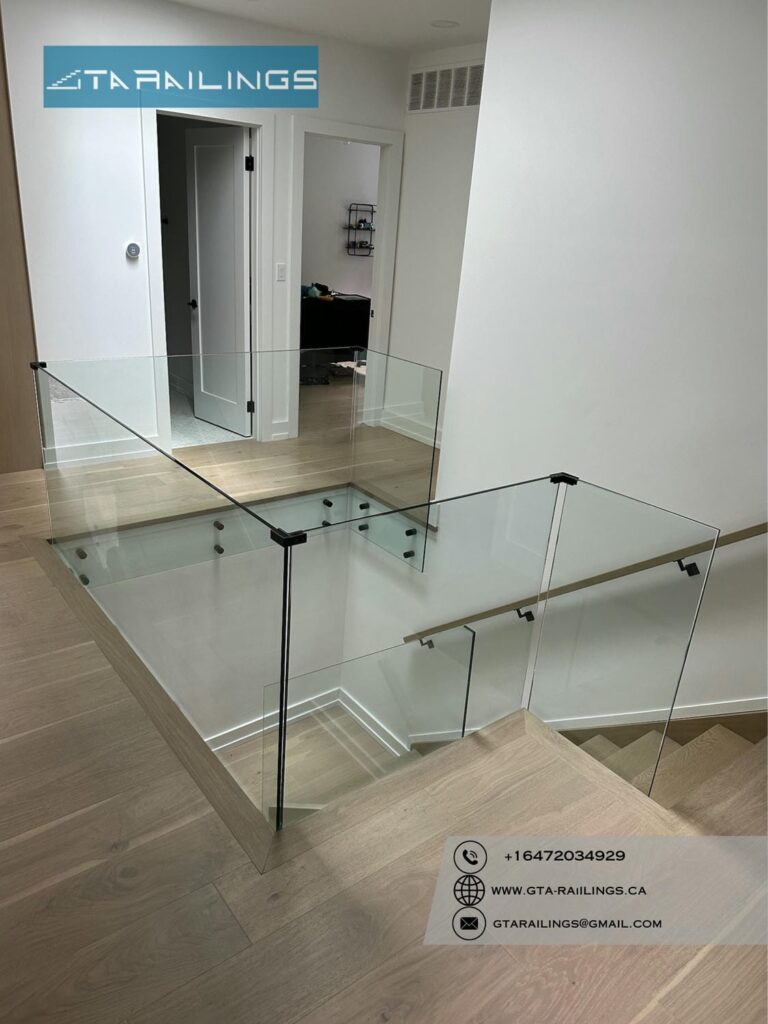
Frameless shines on feature stairs and open-to-below edges because it protects the view. If you have a dramatic stairwell, a two-storey foyer, or a landing overlooking a living space, frameless can keep the architecture clean.
This is also where hardware placement matters most. A slim base reads premium. A tall, bulky base reads like a retrofit. The best design matches the hardware profile to the sightlines of the space.
Homes Where Daylight And Visual Openness Matter
If your home leans dark or tight, frameless glass helps light travel. It keeps the stair zone from becoming a visual wall. That can change how the whole main floor feels, even if you don’t change any windows.
This benefit is hard to “unsee” once you experience it. That’s why many homeowners choose frameless even when the cost is higher. The daily experience is different.
Renovations Where You Want A Modern Update Without Changing Layout
Frameless can modernize the stair zone without moving walls or changing the stair footprint. You’re changing perception and sightlines, not structure. That’s a smart renovation move when the layout is fine but the house feels dated.
Just avoid rushing the selection. Renovations are where structure limitations show up, and where planning prevents expensive compromises later.
When You Should Consider Another Approach
Frameless isn’t always the smartest option. If you value low maintenance over openness, or if your structure is limited, a post-supported glass system may deliver a better lived result with fewer tradeoffs.
This is not a “don’t buy frameless” section. It’s a “buy it for the right home” section.
If You Don’t Want To Wipe Glass Often
If fingerprints will annoy you, that’s not a minor detail. It’s a daily lifestyle issue. Frameless glass is easy to wipe, but it does ask for more frequent wipe-downs in busy homes.
You can reduce touching with a handrail plan, but you can’t eliminate smudges entirely. If you want a railing you almost never notice, a different approach may suit you better.
If Your Structure Or Edge Conditions Are Limited
Some stair edges and landing conditions simply aren’t ideal for certain frameless systems without additional structural work. That doesn’t mean you can’t do glass. It means you might be better served by a post-supported glass infill system that feels more forgiving and rigid in a renovation environment.
A good installer will tell you when the structure suggests a different path. The goal is a clean result that feels solid, not a forced “frameless” label.
If Budget Or Timeline Is Tight
Frameless looks simple, but it usually involves more decision points: hardware, handrail approach, glass spec, panel layout, and edge conditions. If you need a fast, straightforward solution, a simpler system can reduce complexity and still look clean.
The cost issue is also real. Frameless is a premium look. If it strains the budget, you can often achieve 80 percent of the visual benefit with a smart glass infill approach.
The Specs That Decide Whether Frameless Feels “Premium” Or “Fussy”
This is where most regret lives. Two frameless railings can look similar in photos, but feel very different in real life. The difference usually comes down to hardware bulk, thickness direction, and how corners and seams were planned.
If you care about “premium,” focus here.
Hardware Choice Sets The Visual Bulk
Hardware defines how frameless reads. A slim base shoe can make the glass look like it rises from the floor. Point supports can make it feel floating. Top caps and trims can either add a clean line or add visual bulk, depending on the design.
The full comparison of low-profile options and where each makes sense on stairs versus landings is covered in the GTA Railings guide to hardware for indoor glass railings.
Glass Thickness Is A “Feel” Decision, Not Just A Number
Thickness isn’t just about safety. It’s about how the system behaves and how confident it feels when you use it. Larger panels and taller guards can increase movement perception, which is why thickness direction often changes between system styles.
Our guide to minimum glass thickness for indoor glass railings explains what that number actually depends on in homeowner-friendly terms, which is worth reading before you compare quotes.
Panel Breaks And Corner Details Matter More Than Most People Expect
Corners, ends, and seams are where cheap installs show. If seams land in awkward places, the railing looks “assembled” instead of designed. If corners are messy, the whole stair can feel off even if the glass is high quality.
A smart layout places breaks where they look intentional from the main viewpoints in your home. It also avoids tiny slivers and odd returns that create visual noise. Frameless is minimal, so the details have nowhere to hide.
Ontario Code And Safety Notes
Guards And Handrails Are Different Jobs
A guard prevents falls off an edge. A handrail helps people use stairs safely. Frameless glass usually serves as the guard, but you still need to plan the handrail function where stairs require it.
This is where many “frameless” projects get messy. People decide glass first, then add a handrail later, and it looks bulkier than it needed to. Plan the grip line early.
Openings And Stair Geometry Still Apply
Ontario guard intent includes controlling openings and managing stair-specific geometry like the stair triangle area. Homeowners often hear common benchmarks like 100 mm openings and 150 mm stair triangle limits, but context matters and details depend on the specific condition.
Our guide to indoor glass railing code requirements in Ontario covers the practical implications in plain terms and serves as a useful checklist before you finalize your project scope.
Where To Confirm The Rules
For the official regulation text, Ontario’s eLaws regulation page is the most reliable government source for confirming exact guard and handrail requirements.
That page is not “easy reading,” but it’s the correct reference point when you need to confirm intent and definitions. For homeowners, the practical move is to use it as a reference while you rely on a site-specific plan for your stair and landing.
How To Decide In 5 Steps
Step 1: Decide What You Want More (Sightlines Or Low-Maintenance)
If your top priority is openness and light, frameless belongs on the shortlist. If your top priority is not noticing your railing day to day, frameless may frustrate you because it shows fingerprints and smudges more clearly.
Be honest here. This one preference decides whether the pros feel worth it.
Step 2: Confirm Your Stair And Landing “Guard Zones”
Walk your home and identify where the drops are and where people actually travel. A long landing edge and a short stair run behave differently. Your guard zones also tell you where the railing needs to feel most rigid.
This step prevents overspending. You may not need the most minimal solution everywhere. You may only need it where sightlines matter most.
Step 3: Pick The Frameless Look (Shoe Vs Point-Supported) Based On Your Conditions
Choose the look that fits your structure. A base shoe needs the right substrate and edge conditions. Point-supported systems need precision and suitable anchoring. Both can be great. Both can be wrong if forced.
Don’t pick this based only on “what looks cleaner.” Pick it based on “what will look clean in my home without awkward workarounds.”
Step 4: The “Feel” Factors (Panel Size, Thickness Direction, Handrail)
Ask how the system will feel, not just how it will look. Large panels and tall guards can increase movement perception. A good handrail strategy can reduce people pushing on the glass. A well-designed system feels calm, not springy.
If you want a frameless railing to feel premium, you need to care about these factors as much as you care about the hardware finish.
Step 5: Compare Quotes Apples-To-Apples
Two frameless quotes can hide very different systems. The only fair comparison is one that matches hardware type, glass spec direction, handrail approach, and assumptions about structure.
If the quote doesn’t clearly state those items, it’s not comparable yet. Ask questions before you decide.
What To Ask In A Quote
A good quote reads like a system description, not a vibe. “Frameless glass railing” by itself is not a spec. It’s a label. Use this section to force clarity.
What Hardware System Is Included?
Ask what mounting system is included: base shoe/channel, standoffs, clamps, top cap, and finishing trims. Ask what finish and profile you’re getting. Hardware defines the look and the constraint set.
If the hardware isn’t specified, you don’t really know what you’re buying. You only know the marketing category.
What Glass Spec Is Included?
Ask what glass spec is included at a high level: glass type direction (tempered vs laminated), thickness direction, panel sizing approach, and any hole/notch requirements. You don’t need engineering math. You need clarity.
If a quote hides glass spec behind “standard glass,” expect surprises later. Frameless systems are not the place for vague language.
What Handrail Strategy Is Included?
Ask how the stair grip is being handled: top cap, integrated rail, separate handrail, wall rail, and how terminations are finished. A handrail plan is part of usability and part of aesthetics.
This is also where the cleanest frameless projects win. They plan the handrail early so it looks integrated, not added.
What Assumptions Are Being Made About Structure?
Ask what the quote assumes about the substrate and anchoring. If upgrades are needed, it’s better to find that out before fabrication. Structure affects both cost and outcome.
This question also protects you from false comparisons. One quote may assume ideal conditions while another includes the reality work.
Frameless Indoor Glass Railings Done Right
Frameless indoor glass railings look simple, but they aren’t a one-line purchase. The best results come from matching hardware to structure, planning the handrail early, and choosing glass spec as part of a complete system so the railing looks clean and feels solid.
GTA Railings brings over 15 years of experience, railings made in Canada, and a certified and insured team. With a 2‑year warranty on materials and workmanship and a commitment to Ontario Building Code intent, our indoor glass railings services are the right starting point for frameless done right.
Frequently Asked Questions
A frameless indoor glass railing is a guard that reads as mostly glass with minimal visible posts, supported by low-profile mounting hardware like a base shoe/channel or point supports. “Frameless” is a visual description, not “no hardware.”
Yes, when designed and installed as a proper guard system. Safety depends on the full system: structure, mounting method, glass spec, and handrail strategy where needed. The frameless label alone doesn’t guarantee anything.
Often, stairs require a graspable handrail strategy. Frameless glass can still be used, but planning the grip line early keeps the design clean and usable, which is why GTA Railings covers the full range of handrail options for indoor glass railings as a separate topic.
Some movement can be normal depending on spans and system type, but excessive movement usually points to a mismatch in design, anchoring, panel sizing, or spec choices. If “solid feel” is a priority, make that part of the quote conversation.
They’re easy to wipe, but fingerprints and smudges show more on clear glass than most homeowners expect. A good handrail plan reduces glass-touching, which reduces how often you see prints.
Typically yes. You’re paying for premium low-profile hardware, tighter tolerances, and a system where the glass carries more of the visual and structural role compared to post-heavy systems.
Sometimes, but anchoring conditions matter. The right approach depends on the edge build-up, the structure beneath finishes, and the mounting method you’re choosing. A site-specific review prevents forced compromises.