

If you are opening, extending, or changing a licensed patio in Toronto, the railing is not just a product choice. It usually sits inside a bigger approval path that can involve AGCO licensed-area rules, Toronto patio approvals, zoning review, and sometimes Toronto Building. The fastest answer is this: there is no single “AGCO patio railing rule” that covers every Toronto restaurant patio. Start with the scope, the patio type, and the licensed-area boundary first, then choose the restaurant patio railing system that suits the approved layout.
Permanent patios, temporary patios, private-property patios, and sidewalk cafés are different decisions even when they all end with a new patio railing. A temporary outdoor patio extension follows its own approval framework, separate from the rules for a permanent licensed area.
Start With The Patio Type, Because The Approval Path Changes Immediately
The word “patio” hides a lot of very different approval paths. A permanent licensed patio attached to your restaurant is not the same thing as a temporary patio for a season. A private-property patio is not the same thing as a sidewalk café in the public right-of-way. If you mix those up, the railing discussion becomes confused fast.
That is why the first job is classification, not design. Before you compare aluminum to steel or ask how tall the fence should be, you need to know what kind of patio you are actually building.
Permanent Licensed Patio Vs Temporary Patio
AGCO treats permanent patio changes as licensed-area changes. Its current liquor sales licence guidance says licensees need to use iAGCO when they are increasing capacity, adding a new permanent indoor or outdoor licensed area, or changing the boundaries of the original layout. That means a permanent patio is not just “more tables outside.” It is a boundary and licensing question.
Temporary patios follow a different path. Licensees in municipalities must get approval for a temporary patio from the local municipality and then notify AGCO of the approval, the duration, and any conditions. The section on temporary licence extensions sets out that sequence, which is a big shift from the older assumption that AGCO itself approved every patio.
Private Property Patio Vs Sidewalk Café Or Curb-Lane Setup
Toronto treats patios on private property differently from sidewalk cafés. The City’s guidance on patios on private property says that if the patio is entirely on private property, complies with zoning, and does not include structures that require a building permit, City permission is not required prior to installation except as noted under business licence endorsement, and the City also says you do not need permission to install a modest fence or guardrail. That sounds simple, but it only applies inside that specific fact pattern.
Sidewalk cafés are different. Toronto’s sidewalk café permit requirements include a site plan drawing and a fencing or planter drawing. That means the perimeter treatment is not an afterthought on public-right-of-way patio applications. It is part of the permit package.
Why This Matters Before You Price A Railing
The same railing concept can move through very different review lanes depending on where the patio sits and how alcohol service is being approved. A low-profile fence detail that works on a private patio endorsement may be the wrong starting point for a sidewalk café package, and a temporary patio conversation is different again.
That is why the best restaurants do not start by shopping the railing alone. They start by defining the patio type, the licensed area, and the municipal route, then bring in the Toronto execution side with custom railings built for the approved layout.
What AGCO Actually Requires For A Patio Serving Alcohol
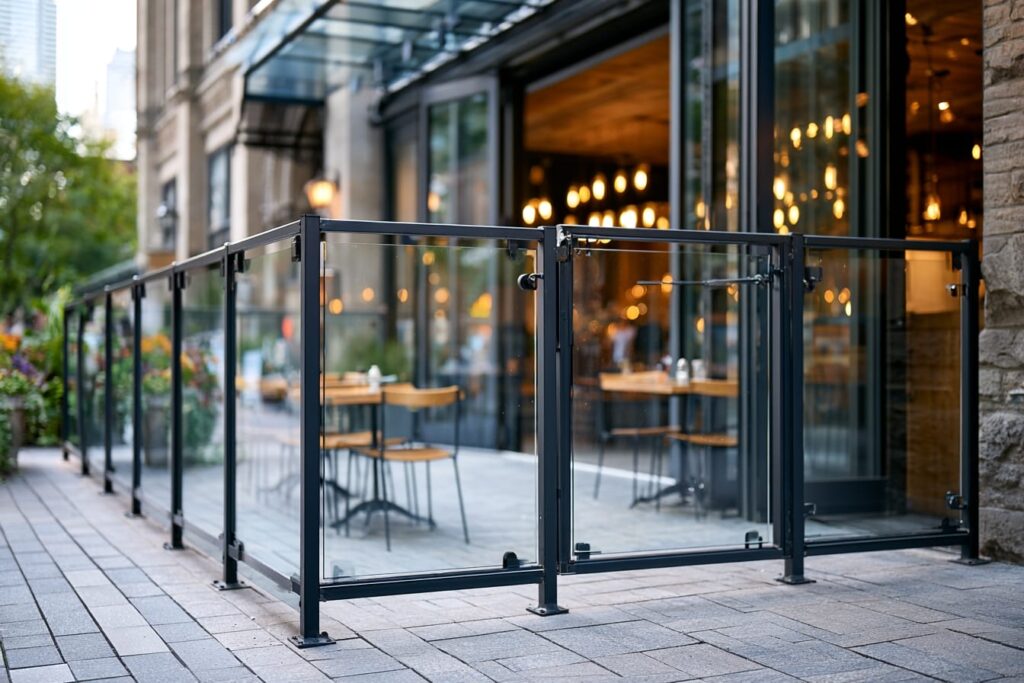
AGCO is not there to tell you which picket profile to use or what powder-coat colour looks best. Its role is to regulate the licensed premises and the licensed area. For patio projects, that means boundaries, floor plans, capacity, and the right municipal approvals.
This is the part operators often miss. The railing matters to AGCO mainly because it can help define the licensed area and the perimeter of service.
Licensed Area Changes, Boundary Changes, And Capacity Changes
The same liquor sales licence guidance says you must use iAGCO to make changes to the licensed area, and it specifically points to increasing capacity, adding a new permanent indoor or outdoor licensed area, or changing the boundaries of the original layout. So when a Toronto restaurant adds or reworks a patio for alcohol service, the first licensing question is whether the licensed area is changing.
That is why “we’re just putting a fence around it” is not a safe description. If the fence defines or changes the licensed outdoor space, it becomes part of the boundary logic. That is what AGCO cares about first.
Floor Plans Matter More Than Restaurant Owners Expect
The AGCO floor plan guide says floor plans must be to scale, show dimensions, clearly outline proposed licensed areas, and show the layout of the entire premises. That is not decorative paperwork. It is how the regulator understands what area is being licensed and how it relates to the rest of the establishment.
This is also where the patio railing becomes part of the submission logic. If the patio perimeter is meant to define the service area, the layout has to show that clearly. A vague sketch and a beautiful railing quote do not solve the same problem.
Municipal Approval Is Built Into The AGCO Path
AGCO also builds municipal approval into the liquor licence process. The liquor sales licence application materials say agency letters of approval, also called compliance letters, are required, and the municipal approval guidance provides a template form of approval letter for municipal officials. AGCO does not replace local approval. It expects it.
That is the core takeaway for Toronto operators. A patio railing project for alcohol service is not just an AGCO problem, and it is not just a City problem. It is both.
Where Toronto Adds The Real Fence And Railing Requirements
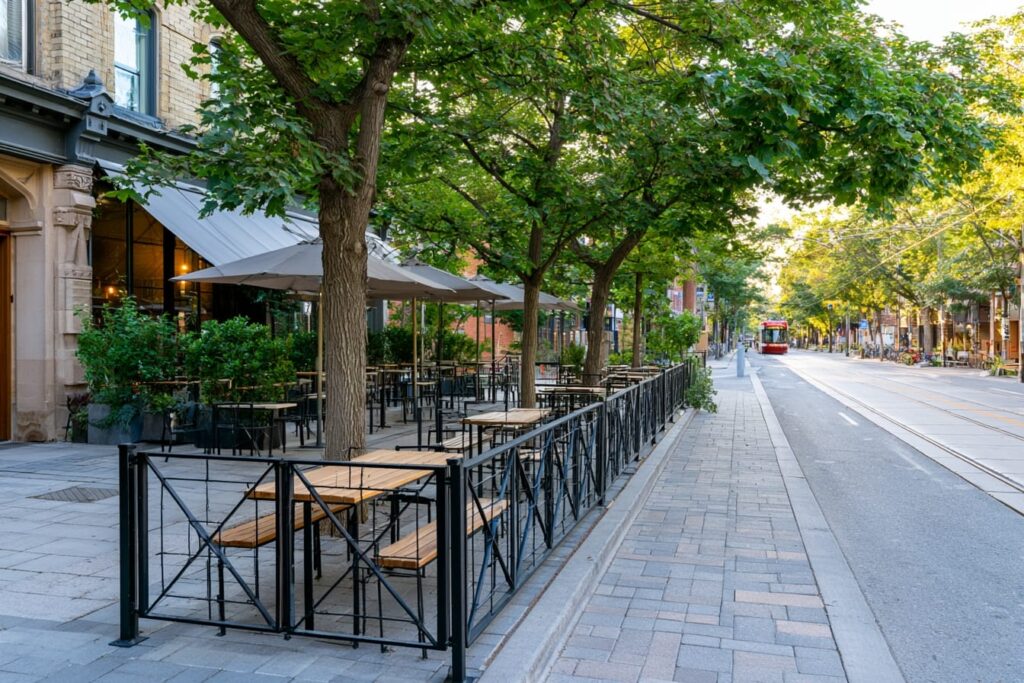
Toronto is usually where the physical patio conditions become more specific. The City decides how the patio fits the site, the street, the zoning context, and, in some cases, the public right-of-way. That is where railings and fencing stop being generic.
This is also where restaurant owners realize that “patio approval” is not one office or one form.
Private Property Patios Need Zoning Review Before The Endorsement
Private patios associated with restaurants and bars are regulated by zoning by-laws. On the business licensing side, Toronto’s eating or drinking establishment licence requires a Notice of Zoning By-law Compliance Letter or a building permit with stated approval of the private patio.
Toronto’s licence to serve alcohol adds another practical note: if your application includes an outdoor patio, you must ensure that a building permit has been issued that includes the patio or that you have obtained a preliminary zoning review for it.
Sidewalk Café Permits Require Fence Or Planter Drawings
Toronto’s sidewalk café permit package is even more explicit. Applicants must submit a copy of the site plan drawing and a copy of the fencing or planter drawing. If you are in the public right-of-way, the edge treatment is part of the permit package from the start.
That should change how you think about quotes. A sidewalk café fence is not just something you pick later. It is one of the items the City expects to see on paper before the permit is approved.
Not Every Toronto Patio Uses The Same Fence Rule
This is where people get tripped up. Toronto does not use one universal patio fence rule across every patio type. The current sidewalk café by-law sets requirements for café fencing where it is permitted, including a top rail no shorter than 0.9 m and no taller than 1.2 m, plus opacity and sightline limits near intersections, and the sidewalk café design guidelines expand on those details. That is a public-right-of-way café rule, not a blanket AGCO rule for every restaurant patio in Toronto.
So when someone asks, “What is the AGCO patio railing height,” the honest answer is usually: you are asking the wrong question. First identify the patio type, then identify the City path, then confirm the physical edge requirements that apply to that patio category.
Toronto’s Liquor Clearance Form Treats The Fence Or Railing As A Real Review Item
Toronto’s municipal liquor licence clearance form asks whether the patio is on private property or City boulevard, whether the patio is enclosed with a fence or railing, and it requires a floor plan showing the location of licensed areas, including outdoor patio areas. That makes the railing part of the alcohol-service approval conversation in Toronto, not just a construction detail.
For operators, that is the practical lesson. If the City is asking whether the patio is enclosed with a fence or railing, then the perimeter treatment belongs in the approval plan early, not after the licence path is underway.
AGCO Approval Is Not The Same Thing As A Finished Guard That Works
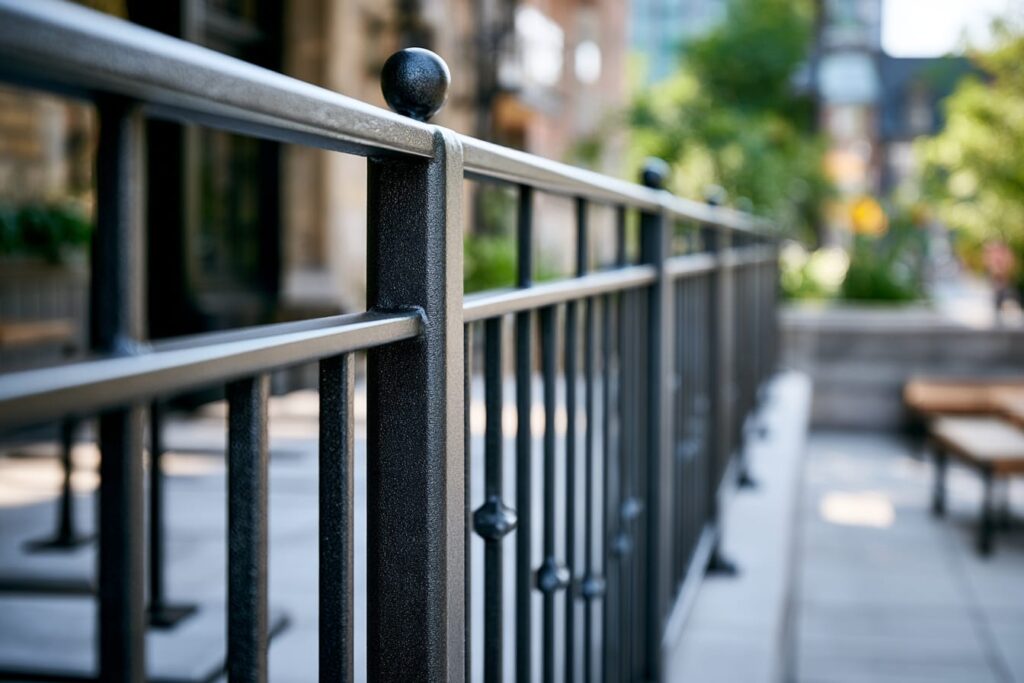
A licensed patio boundary is not automatically a good guard or a good railing. The licensing file may accept the perimeter concept, but the physical installation still has to suit the site, the traffic pattern, and any applicable building or guard expectations.
This is where restaurants can get caught between two different realities: approval logic on paper and everyday performance on site.
A Licensed Boundary Is Not Automatically A Compliant Guard
A line on a floor plan can define a licensed area, but it does not tell you whether the installed barrier is robust, well-detailed, or appropriate for the patio condition. If the patio has level changes, deck edges, stairs, or areas where patrons lean, gather, or queue, the physical railing still needs real design attention.
That is why the railing should not be treated as a licensing prop. It is part of the customer environment, the staff circulation pattern, and, in some cases, the safety strategy of the patio itself.
Building Or Structure Changes Can Bring Toronto Building Into The Job
Toronto’s guidance on when a building permit is required says a permit is needed for construction, demolition, additions, or material alteration of a building or structure, and it specifically lists porches, decks, and certain structural alterations among common permit-triggering work. On the patio side, the City advises discussing structure proposals with Toronto Building, and building permit approval is required where the café installation alters the building.
The practical takeaway is simple. The moment your patio railing project becomes a deck edge, platform edge, structural barrier, or altered building condition, the job is bigger than a fence spec. That is when Toronto Building may enter the picture.
When The Perimeter Has To Do More Than Mark The Licensed Area
If your patio condition includes stairs, edge protection, or heavier public use, the restaurant licensing path should be paired with real guard thinking. Detailing the handrails and guardrails for the perimeter matters when it needs to do more than just mark the licensed area.
When the job becomes a true building-code guard question rather than only a licensing question, Ontario’s Building Code regulation, O. Reg. 163/24 on e-Laws, is the right provincial source.
Matching Your Patio To Its Approval Path
The four scenarios below cover the approval lanes a licensed restaurant patio usually falls into. Identify your row before you start pricing the railing system, because the lane decides which drawings and approvals come first.
| Patio Scenario | Main Approval Path | What To Verify First |
| Permanent Patio Added To Licensed Premises | AGCO licensed-area change plus municipal approvals | Patio type, floor plan, municipal letters |
| Temporary Patio In Toronto | Local municipal approval plus AGCO notification | Duration, dimensions, municipal conditions |
| Private Property Patio | Zoning review plus private patio endorsement path | Property location, zoning, licence status |
| Sidewalk Café Or Public Right-Of-Way Patio | Toronto sidewalk café permit plus supporting drawings | Site plan, fence or planter drawing, building alterations |
If you can identify your row clearly, the job gets easier fast. If you cannot, stop there and sort out the patio type before you choose the railing.
How To Figure Out Your Patio Approval Path In 5 Steps

A lot of restaurant owners try to shortcut this. That usually means the designer, fabricator, and operator all think they are talking about the same patio when they are not. These five steps keep the job clear.
Step 1: Identify The Patio Type
Start by deciding whether the patio is permanent or temporary, and whether it sits on private property or in the public right-of-way. Those two answers change almost everything that comes next.
Do not skip this because the patio is “small.” A small patio can still be the wrong permit type.
Step 2: Confirm Whether You Are Changing The Licensed Area
If the patio is new, expanded, or differently bounded for liquor service, treat it as a licensed-area question first. AGCO’s current guidance makes that clear by pointing licensees to iAGCO for capacity increases, new permanent outdoor licensed areas, and layout boundary changes.
This step matters because it shifts the conversation from “what fence do we want” to “what licensed perimeter are we actually proposing.”
Step 3: Confirm The Toronto Path
Once the licensed-area logic is clear, confirm whether the Toronto side is a private patio endorsement, a sidewalk café permit, or a structure change that may involve Toronto Building. The City’s private patio, sidewalk café, and business licensing routes each speak to a different version of that question.
This is where “same word, different permit path” becomes real. The City is not reviewing every patio the same way.
Step 4: Build The Submission Package Before You Order Product
Floor plans, site plans, fence drawings, and any required zoning or municipal letters are not paperwork you do after you pick the railing. They are part of how you confirm that the railing concept fits the licensed area and the City path.
AGCO’s floor-plan guide and Toronto’s sidewalk café permit package both support this sequence: confirm the drawings before product is ordered.
Step 5: Fabricate Only After The Approval Logic Is Clear
Once a custom railing is built, the job becomes harder to change. That sounds obvious, but it is where a lot of patio projects lose time and money. If the City needs a different fence detail, a different opening treatment, or a different layout on paper, fabrication becomes a liability instead of progress.
Keeping fabrication aligned with the approved drawings is what protects the budget once the perimeter design is locked in.
Get The Approval Path Right Before You Fabricate
The fastest way to lose time and money on a licensed restaurant patio is to fabricate first and clarify the approval path second. GTA Railings brings over 15 years in business, Made in Canada products, a certified and insured team, and a 2-year warranty on materials and workmanship. If you want a patio railing system that fits the real AGCO and Toronto path, talk to us about restaurant railings built for your approved layout.
Frequently Asked Questions
Not as one universal rule for every patio type. AGCO’s current guidance focuses on licensed-area changes, floor plans, municipal approvals, and temporary patio notifications, while Toronto often controls the patio permit and fence-detail side depending on the patio type.
Usually yes in some form, but the exact path depends on whether the patio is permanent or temporary. AGCO treats permanent licensed-area changes through iAGCO, while temporary patios in municipalities require local municipal approval plus AGCO notification.
A private patio on your own property follows zoning and endorsement rules, while a sidewalk café is a municipal permit in the public right-of-way with its own site plan and fence or planter drawing requirements. Toronto treats them as different approval types.
In most alcohol-service patio approval paths, yes. AGCO’s floor-plan guide requires the proposed licensed areas to be clearly outlined, and Toronto’s sidewalk café permit package requires fencing or planter drawings.
Toronto Building becomes relevant when the patio includes permit-triggering construction, structural or material alteration, or building changes to accommodate the café or patio. That is why deck edges, platforms, and anchored structures need a wider review than a loose perimeter concept on paper.
You should treat the patio as unapproved for liquor service until the licensed-area and municipal path is fully resolved. The safe assumption is that a patio only becomes part of the approved liquor-service area after the required AGCO and municipal steps are complete.
Because operators mix up patio type, confuse AGCO with Toronto’s permit path, or order railings before the floor plans, zoning, and municipal conditions are settled. The approval logic usually breaks before the fabrication does.