
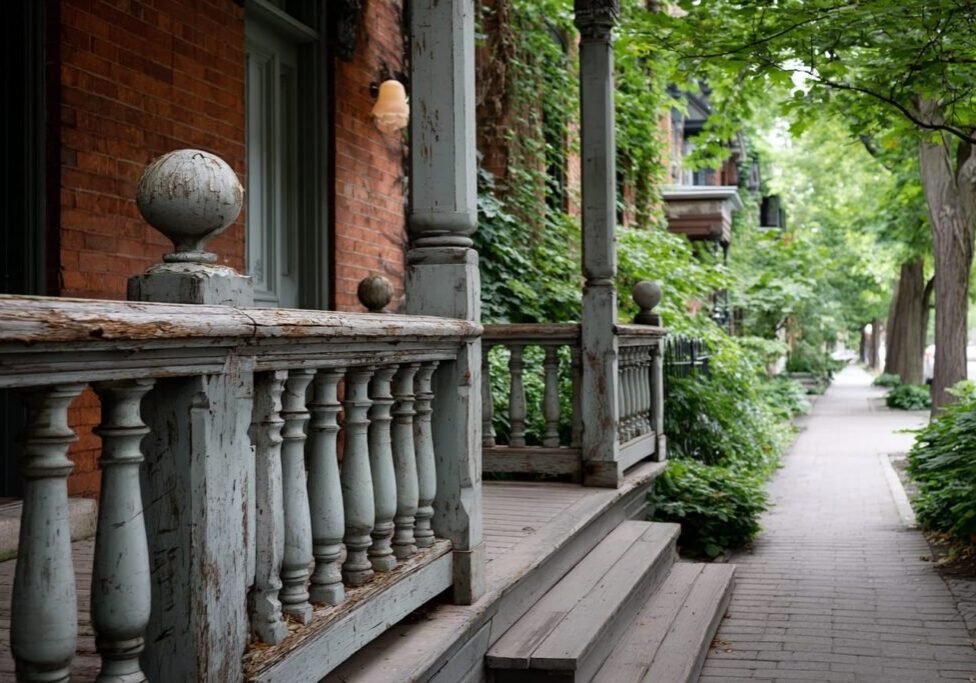
If your house is heritage-designated in Toronto, replacing the front porch railing is rarely just a “swap the old one out” job. In many cases, you should assume the heritage approval path comes first, and then confirm whether Toronto Building is also part of the review based on the actual porch and guard scope. For broader local context, our work on custom railings in Toronto covers the styles common on local front porches. Toronto says owners of designated properties need a heritage permit before making changes, and it handles Part IV designated properties differently from Part V Heritage Conservation District properties.
Start By Checking The Property Status
The first mistake is assuming “heritage” means one thing. In Toronto, the approval path changes depending on whether the property is individually designated, within a Heritage Conservation District, or only listed on the Heritage Register. Those are not small legal distinctions. They change who reviews the work and how early you need to involve the City.
If you skip this step and jump straight to materials or quotes, you can end up pricing the wrong job. That is especially risky on front porches, where the railing is part of the public-facing character of the house and the street.
Designated, Heritage Conservation District, Or Only Listed
Toronto says owners need a heritage permit before changing properties that are designated under the Ontario Heritage Act. It also says permits are not required for listed properties that are not designated, which is where a lot of projects go sideways because owners assume listed and designated mean the same thing. They do not.
The other wrinkle is that listed properties are not invisible to the City. Toronto says listed-but-non-designated properties still carry a written notice requirement before removing or demolishing a building or structure, even though they do not require a heritage permit. So the first job is status, not styling.
Use The Heritage Register Search Tool Before You Do Anything Else
Toronto’s Heritage Register page says the Heritage Property Search Tool is the most up-to-date way to confirm whether a property is on the Register. That makes it the right first move before you talk about aluminum, wrought iron, glass inserts, or a “same look, different material” replacement.
The search tool also helps you identify whether the property is listed, individually designated under Part IV, or located within a Part V Heritage Conservation District. Those categories are what drive the next decisions, so this is not admin busywork. It is the actual fork in the road.
Why The Designation By-Law Or HCD Plan Matters For Railings
Once you confirm the property status, the next question is not “do I like this railing profile.” It is “what exactly is protected here.” Toronto’s Heritage Permit Guide says heritage attributes are detailed in the designation by-law for the property. That is the document that tells you whether the porch, verandah, balustrade, trim, or related front elevation features are part of what must be conserved.
For Heritage Conservation District properties, the district plan and guidelines matter because the City reviews visible exterior changes through that lens. This is why a front porch railing on a heritage street is not just a code item. It can also be a character item. If you miss that, you can price a replacement that the City will not support in its current form.
Heritage Approval Vs Building Permit: You May Need Both

The safest way to think about this is not “heritage or building permit.” It is “what is the approval path for this exact scope.” Heritage review and building permit review are different jobs, and on some Toronto porch projects they overlap.
This is where homeowners lose time. They assume a front railing replacement is either obviously permit-free or obviously just a building permit issue. On designated properties, neither assumption is smart.
Part IV Individually Designated Properties
Toronto’s Heritage Permit Guide says permission is required for work that involves altering, demolishing or removing, or erecting a building or structure on properties designated under Part IV of the Ontario Heritage Act. It also says Heritage Permit applications for individually designated properties are submitted by email and permission must be obtained before starting work.
That matters for porch railings because a front porch guard is not hidden work. It is part of the public face of the house. Even if the old railing is in poor shape, the City still needs to see how the proposed replacement affects the heritage attributes before work starts.
Part V Heritage Conservation District Properties
Toronto says that if you propose to alter or demolish a building or structure on a property within a Heritage Conservation District, and the proposal requires a building permit, you submit the drawings, specifications, and details through Toronto Building as part of the building permit application. Heritage Planning then reviews the application through that process. Toronto also says that some heritage alterations in an HCD may not require a building permit, and in those cases applicants should contact Heritage Planning directly.
That is why HCD projects can feel confusing. The heritage review path exists either way, but the submission route changes depending on whether the work is also permit-triggering from the building side.
Where Toronto Building Fits In
Toronto’s general building permit page says a building permit is required for most construction, demolition, additions, or major renovations, and that plans are reviewed for compliance with the Ontario Building Code, zoning by-laws, and other applicable laws. Its Decks and Porches guide specifically covers building permit review for a deck, veranda, or porch to an existing house. That is why porch railing projects need to be scoped carefully instead of being treated as generic finish work.
The careful advice here is simple: do not assume every front porch railing swap automatically needs a building permit, and do not assume it never does. Confirm whether your scope is only a like-for-like railing change, or whether it is part of a permit-triggering porch, veranda, stair, or guard alteration. The City’s porch guidance is the right source to check what the permit review expects when that threshold is crossed.
What Usually Triggers Review On A Heritage Porch Railing Job
The City does not look at these projects only through the lens of “new railing equals permit.” It looks at what is changing, how visible it is, and whether the porch character is being altered. That is why porch projects feel bigger than they first sound.
On designated properties, the issue is often not whether the railing is old. It is whether the porch, verandah, or railing detail contributes to the protected character of the property or the district.
Repair In Kind Vs Full Replacement
Repairing existing material is not the same as replacing the full railing system. A limited repair that conserves the original design intent may be a very different discussion than removing the entire balustrade and installing a new manufactured system. Toronto’s Heritage Permit Guide repeatedly frames review around whether the proposal alters, removes, or demolishes heritage attributes, not just whether the owner thinks the new railing looks “similar enough.”
That is the first practical question to settle. Are you restoring, partially rebuilding, or fully redesigning the porch guard? If you are not honest about that, you are likely to prepare the wrong drawings and the wrong approval path.
Changing Material, Profile, Height, Or Pattern
Material changes are where the review usually gets more sensitive. Switching from painted wood to aluminum, changing the baluster rhythm, thickening the top rail, altering post caps, or changing the overall porch guard proportion can all affect how the front elevation reads. Toronto’s Heritage Permit Guide specifically says drawings and specs should show proposed changes to porches and verandahs, exterior trim, fencing or means of enclosure, materials, colours, dimensions, and the extent of work.
The practical lesson is that “same function” does not equal “same heritage impact.” A front porch railing is a visible design element. If the replacement changes the profile language of the porch, the City may treat it as a real heritage change even when the owner sees it as maintenance.
Rebuilding Porch Structure, Stairs, Or Guards Alongside The Railing
The permit picture usually gets more serious when the work includes stair rebuilds, porch framing repairs, columns, decking, or substantial guard reconstruction. Toronto’s Decks and Porches guide asks for stair construction details and guard construction details, including openings, climbability, and guard location relative to stairs, landings, and edges. That is a much bigger submission than “new railing style attached.”
If your project has already moved beyond simple removal and replacement, you are no longer pricing only a railing. You are pricing a porch guard project. That is the right moment to look at the full scope of porch railings, not just the decorative face of the railing.
What The City Usually Wants In A Submission

A good submission does not try to “sell” the City on the design with vague words. It gives Heritage Planning and, where relevant, Toronto Building the material they need to understand the existing condition, the proposed work, and the reason for the change. Toronto’s Heritage Permit Guide is very explicit about this.
This is also where homeowners can save time. The City is easier to work with when the package is clear, complete, and specific to the porch.
Recent Photos And Existing Condition
Toronto’s Heritage Permit Guide says the application should include recent photographs, generally within three months, showing the existing buildings, structures, heritage attributes, and their condition and context. For a porch railing project, that means clear shots of the front elevation, the porch, the stairs, the railing, posts, trim, and how the porch sits in relation to the street.
This matters more than people think. If the existing railing is failing, rotten, loose, or visibly altered already, the photos help frame the case for repair or replacement. If the porch still retains strong historic character, the photos also show exactly what the proposed work needs to respect.
Site Plan Or Location Sketch
Toronto’s guide also asks for a site plan or sketch showing the location of the proposed alteration, demolition, or removal, including property lines, road frontage, and building footprints. On a small porch job, that can feel excessive until you remember that Heritage Planning is reviewing the work as part of the whole property, not just a detail photo of the balusters.
For a front porch railing, this location material helps the City understand where the work sits on the public face of the property, how visible it is, and how it relates to the overall heritage setting.
Existing And Proposed Drawings, Materials, And Dimensions
This is the core of the package. Toronto says drawings and written specifications should include existing and proposed plans, sections, and elevations, with materials, colours, dimensions, massing, and the extent of work. It also specifically says the drawings and specifications should show any proposed changes to porches and verandahs.
That should change how the homeowner thinks about the job. The City is not only asking “what railing are you buying.” It is asking “what is changing on this porch, and how will that change read on the heritage property.”
Guard Construction Details Still Matter
Heritage appearance is only half the job. Toronto’s Decks and Porches guide says permit drawings for porches need guard construction details, including openings, climbability, and the location of guards relative to stairs, landings, and edges of the proposed platform. This is the point where a heritage porch railing project stops being a decorative replacement and starts being a full guard review.
Pairing the heritage process with solid handrails and guardrails keeps the guard and stair safety details aligned with what the City expects.
Approval Paths By Property Status
The table below summarizes how property status maps to the likely approval path and what to confirm first, so you can place your project before choosing a railing system.
| Property Status | Likely Approval Path | What To Verify First |
| Part IV Individually Designated | Heritage permit first; building permit may also apply depending on scope | Designation by-law and named heritage attributes |
| Part V HCD, Permit-Triggering Work | Submit through Toronto Building; Heritage Planning reviews through permit process | HCD plan/guidelines and porch/guard scope |
| Part V HCD, No Building Permit Trigger | Contact Heritage Planning directly for heritage approval path | HCD plan and whether visible appearance changes |
| Listed But Not Designated | No heritage permit, but other notice rules may still matter in demolition/removal cases | Listed vs designated status and actual scope |
The practical takeaway is simple. Before you choose a railing system, know which row you are in. Everything gets clearer after that.
How To Figure Out Your Permit Path In 5 Steps
A heritage porch project becomes manageable once you reduce it to a sequence. Most delays happen because owners jump from “the railing is failing” to “let’s order new railings” without working through the City path in between.
These five steps keep the job grounded.
Step 1: Confirm Whether The Property Is Listed, Part IV, Or Part V
Start with the City’s Heritage Property Search Tool and confirm the status before you do anything else. This single step tells you whether you are dealing with an individually designated property, a Heritage Conservation District property, or a listed-but-non-designated property.
Step 2: Pull The Designation By-Law Or HCD Plan
Once the status is confirmed, review the designation by-law or the district plan and guidelines. This is where you find out whether the porch, verandah, railing profile, trim, or other front-elevation details are part of the protected character. Toronto says heritage attributes are detailed in the designation by-law, so this is not optional background reading.
Step 3: Decide Whether The Work Is Repair, Replacement, Or Redesign
This is the project-definition step. Are you repairing deteriorated pieces in kind, replacing the full railing with the same design intent, or redesigning the porch guard in new materials and profiles. Each of those paths has a different review risk.
If you blur those categories, the City will not. It will review the project based on what is actually changing, not the shorthand name you give it.
Step 4: Confirm Whether Toronto Building Is Part Of The Path
If the porch or guard work is part of a permit-triggering alteration, Toronto’s HCD process routes the submission through Toronto Building, and the City’s porch guide becomes relevant. If it is not a building-permit-triggering alteration, Toronto says some HCD heritage approvals go directly through Heritage Planning instead.
Step 5: Assemble Heritage And Guard Details Before Fabrication
Do not fabricate first and explain later. Heritage review wants the visual case. Toronto Building, where involved, wants the construction case. That means photos, drawings, material descriptions, and guard details should be lined up before you commit to a custom order.
If you are already at the scope-definition stage, keep the conversation on the actual porch railing work and the guard details, not only on permit language. That is what keeps the design and the approval path moving together.
Common Mistakes That Delay Heritage Porch Railing Projects
The most expensive delays are usually self-inflicted. They come from assuming the project is simpler than it is, or from preparing the wrong kind of package for the City. The good news is that these mistakes are avoidable.
This is the section homeowners usually wish they had read first.
Assuming “Same Style” Means No Approval
Saying “we’re putting back something similar” does not remove the need for heritage review on a designated property. The City looks at whether the work affects heritage attributes or the district character, not just whether the owner believes the new railing is close enough.
That matters especially when the replacement uses a different material or a simplified manufactured profile. Similar function is not the same thing as similar heritage expression.
Applying For A Building Permit Without The Heritage Package Ready
On HCD jobs that go through Toronto Building, Heritage Planning still needs enough information to review the heritage side properly. Toronto’s process makes clear that heritage review is part of the approval path, not a casual follow-up after the permit application is already moving.
A half-prepared package tends to create one predictable result: more review time, more requests for clarification, and more redesign after expectations were already set with the fabricator.
Ordering Railings Before The Design Is Approved
This is the fastest way to waste money. Once the custom railing is fabricated, your flexibility collapses. If Heritage Planning objects to the profile, proportions, or material, or if Toronto Building needs different guard details, the job becomes a revision exercise instead of a clean approval path.
The better sequence is simple: confirm the path, settle the design, then fabricate. Heritage work rewards patience at the front end.
Ignoring Exterior Railing Condition Until The Project Becomes Bigger
Some projects start as “the front railing is loose” and end as “the porch stairs, posts, and guard system all need attention.” That is common on older porches where deterioration has spread past the visible balusters. Knowing when to replace your exterior railings helps you judge when a railing problem is no longer just cosmetic.
Get The Approval Path Right Before You Fabricate
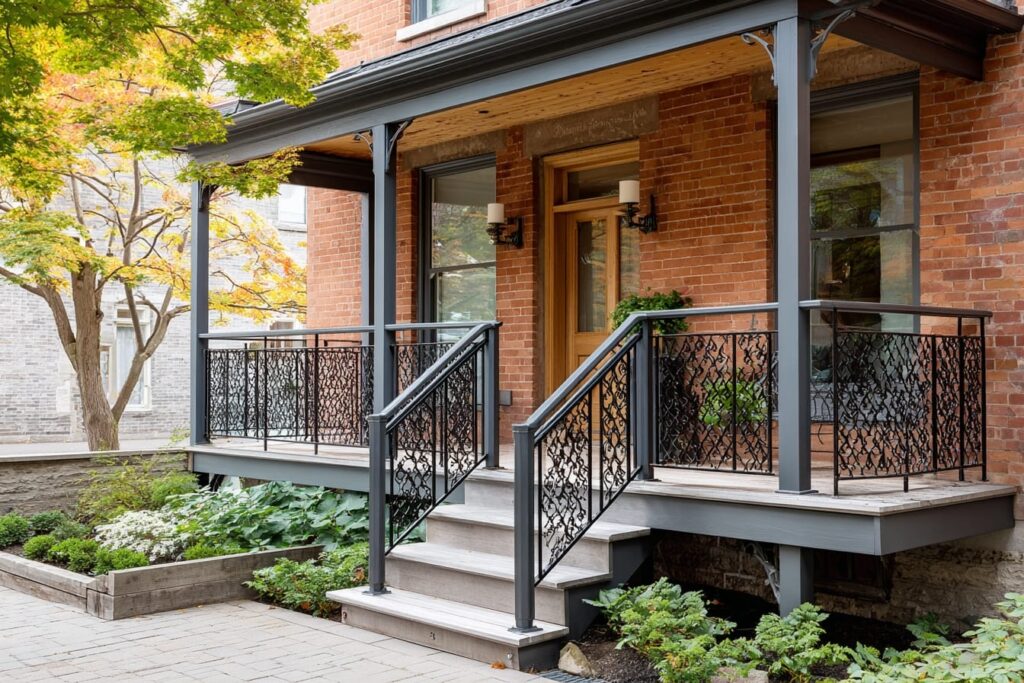
On a heritage-designated Toronto porch, the expensive mistake is rarely “choosing the wrong railing style.” It is fabricating before the approval path is clear. GTA Railings brings over 15 years in business, Made in Canada fabrication, a certified and insured team, and a 2-year warranty on materials and workmanship. If your porch project needs to balance Toronto heritage expectations with a real guard replacement, start with our porch railings service and build from there.
Frequently Asked Questions
If the property is designated under the Ontario Heritage Act, Toronto says heritage approval is required before changes. The exact path depends on whether the property is individually designated under Part IV or is in a Part V Heritage Conservation District.
Toronto says listed-but-non-designated properties do not require heritage permits. However, listed properties still carry a written notice requirement before removing or demolishing a building or structure, so status still matters.
ometimes, but not in every scenario. Toronto’s general permit guidance and its Decks and Porches guide show that permit review becomes relevant when the scope reaches a permit-triggering porch, veranda, stair, or guard alteration. That is why the safest advice is to confirm the scope with the City instead of assuming every railing replacement is treated the same.
Check the designation by-law for an individually designated property, or the district plan and guidelines for an HCD property. Toronto’s Heritage Permit Guide says heritage attributes are detailed in the designation by-law, and that proposed changes to porches and verandahs and other exterior features should be shown in the drawings and specs.
Toronto’s Heritage Permit Guide asks for recent photos, a location plan or sketch, and existing and proposed drawings and written specifications showing materials, colours, dimensions, and the extent of work. Its porch permit guide also asks for stair and guard construction details where the building permit side is engaged.
Potentially, but that is exactly the kind of change that can trigger a closer review on a designated front porch. A material switch can change the heritage expression of the porch even when the function stays the same, so it should never be assumed to be a “minor” upgrade on a designated property.
No. Toronto’s Heritage Permit Guide says permission must be obtained before starting work on individually designated properties, and HCD proposals that require a building permit are reviewed through the Toronto Building route described in the guide.