
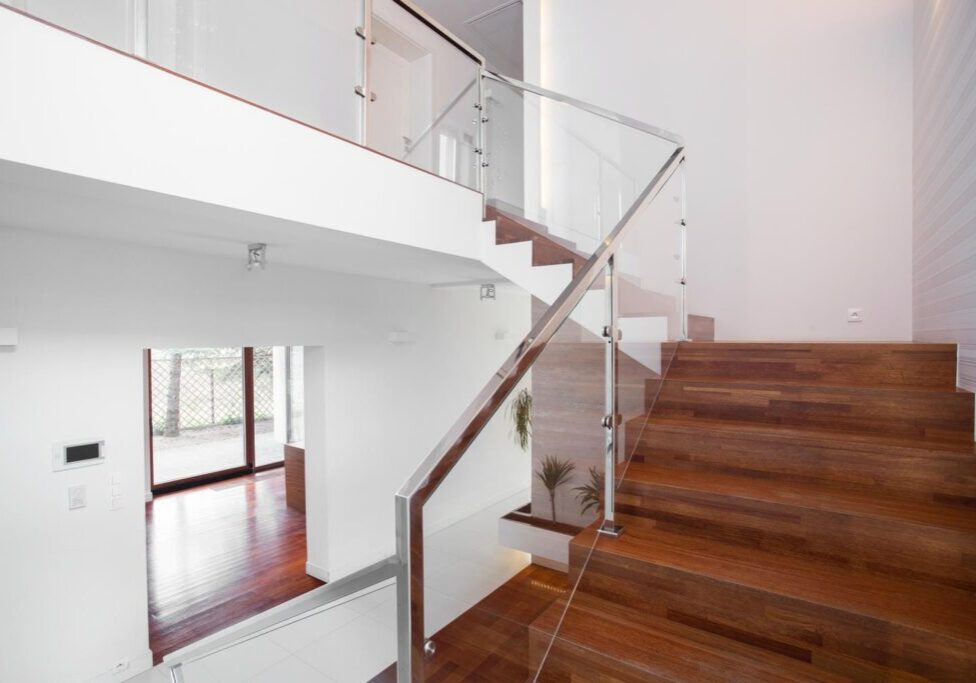
The best glass stair railings are not just glass panels attached to a stair. They are a full staircase system, where the guard, handrail, hardware, and layout all work together so the stair feels open, safe, and easy to use every day.
That matters because staircases are less forgiving than flat landing guards. On a staircase, you are dealing with slope, motion, grip, top and bottom transitions, and the visual role of the stair inside the room. Get those pieces right and glass can make a staircase feel lighter and more refined. Get them wrong and even expensive glass can feel awkward.
Why Staircases Need A Different Glass-Railing Approach
A staircase asks more from a railing than a level edge does. People use stairs in motion, at speed, often carrying things, and often without looking directly at the railing. That means the system has to do more than look clean. It has to guide movement and support confidence.
This is why copying a nice landing detail and applying it to a stair often fails. A stair needs a visual strategy, a grip strategy, and a transition strategy.
What A Glass Stair Railing Actually Is
A glass stair railing is a guard system that protects the open side of a staircase while keeping the stair visually light. That is the simplest way to frame the decision.
The key word is system. If you think about the glass panel only, you miss the parts that make the stair comfortable and safe in real life.
Stairs Add Slope, Grip, And Geometry
A staircase is harder than a flat guard run because it combines slope, hand use, and edge geometry in one place. A beautiful glass panel alone does not solve the stair.
That is why good stair railings start with the questions people skip. Where does your hand go. How does the railing turn at the landing. Where do the top and bottom transitions land. If those answers are weak, the glass will not save the result.
Why Staircases Expose Bad Decisions Faster
On a landing, small design flaws can hide. On stairs, they show fast. An awkward handrail feels wrong immediately. A bulky cap looks heavier because it runs through the whole sightline. Poor transitions at the top or bottom read as unfinished because your eye follows the stair line so naturally.
People also use stairs more actively than landings. If something feels off, they notice it every day. That is why staircase projects benefit from more planning, not less.
Design Goals That Change The Stair
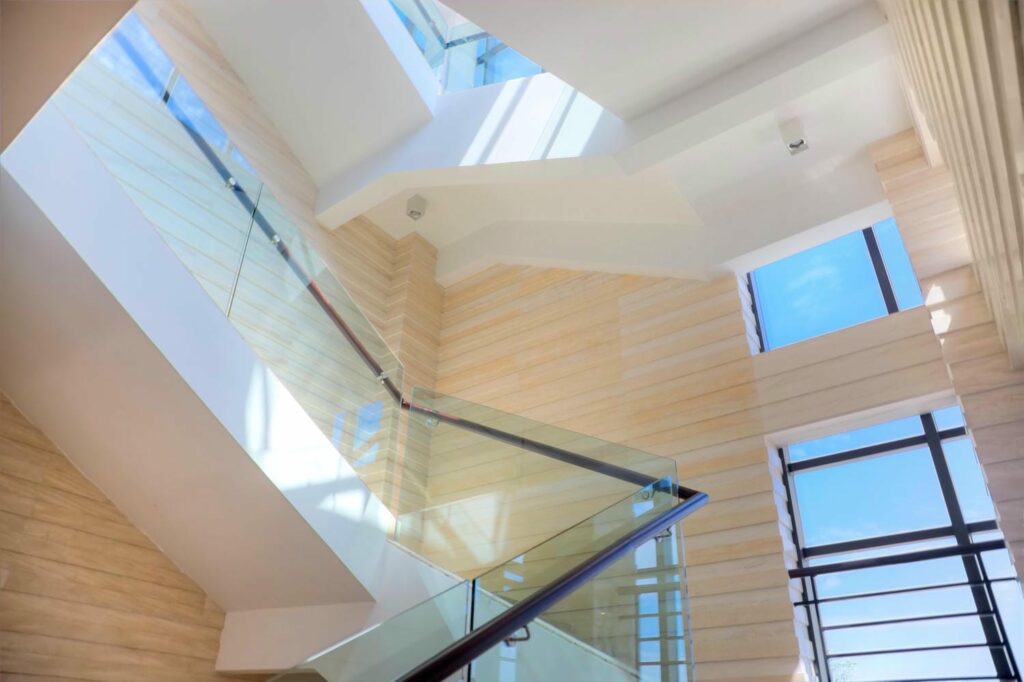
The design goal for a glass stair railing is not “make it modern.” The real goal is to make the stair feel open, intentional, and comfortable without turning the guard into visual clutter. That is a more useful target, because it works in modern homes, transitional homes, and warmer interiors too.
A staircase sits inside the home’s architecture. The railing should support that architecture, not compete with it.
Keep Sightlines Open And Daylight Moving
Glass works well on stairs because it protects the edge without creating another wall inside the room. That matters most when the staircase sits beside the living room, foyer, or open-to-below edge, where the railing is visible from several viewpoints at once.
When the guard stays visually light, daylight travels farther and the room feels more connected. That does not make the stair disappear completely, but it does stop it from breaking the room into smaller visual pieces.
Make Narrow Or Dark Staircases Feel Lighter
Glass can help a tight stair feel less boxed in because it removes much of the visual density that pickets or heavier guards create. In narrow staircases, that change can be more important than any decorative upgrade because it changes how the stair feels to use.
This is especially useful where the stair already has one or two enclosing walls. A more open guard can keep the space from feeling compressed, even when the footprint itself does not change.
Match Modern, Transitional, Or Warm Interior Styles
Glass is often treated like a modern-only material, but that is too narrow. It works in modern interiors, of course, but it can also fit transitional or warmer homes when the treads, handrail finish, and hardware are chosen carefully. The glass stays quiet while the other materials carry the tone.
The broader visual direction matters too, since design options for indoor glass railings read differently across modern, transitional, and warmer homes.
Layout Choices For Different Stair Types
Not every staircase wants the same glass approach. Straight runs, turned stairs, and stairs with open landings all place different pressure on seams, corners, sightlines, and grip. That is why staircase layout should lead the design, not the other way around.
A railing that looks perfect on one stair can look heavy or awkward on another if the geometry changes.
Straight-Run Staircases
Straight-run staircases are often the easiest place to use glass well. The line is clean, the views are predictable, and the railing can read as one simple gesture rather than a collection of turns and returns.
That does not mean straight stairs are automatic. The top transition, the bottom start, and the handrail continuity still matter. But overall, a straight run gives glass the best chance to look simple and intentional.
L-Shaped And U-Shaped Staircases
As soon as the stair turns, the decisions multiply. Corners, landings, and changes in sightline direction mean the railing will be seen from more angles and judged from more rooms. That is where awkward breaks and mismatched detailing start to show.
The key here is not avoiding glass. It is planning where the visual emphasis should sit. A landing corner that looks fine on plan may look awkward from the living room. Turned stairs reward thinking about the room views, not just the stair drawing.
Top And Bottom Transitions, Landings, And Wall Returns
Top and bottom transitions are where many stair glass projects either look built-in or improvised. A good panel run can still lose its clean feel if the start, stop, or wall return is clumsy. These are the detail zones that separate a refined install from an average one.
This is also where homeowners often notice “why does this look bulky?” regret. The middle of the run might be beautiful. The transition details are what decide whether the full stair feels finished.
Safety Basics You Need To Plan Early
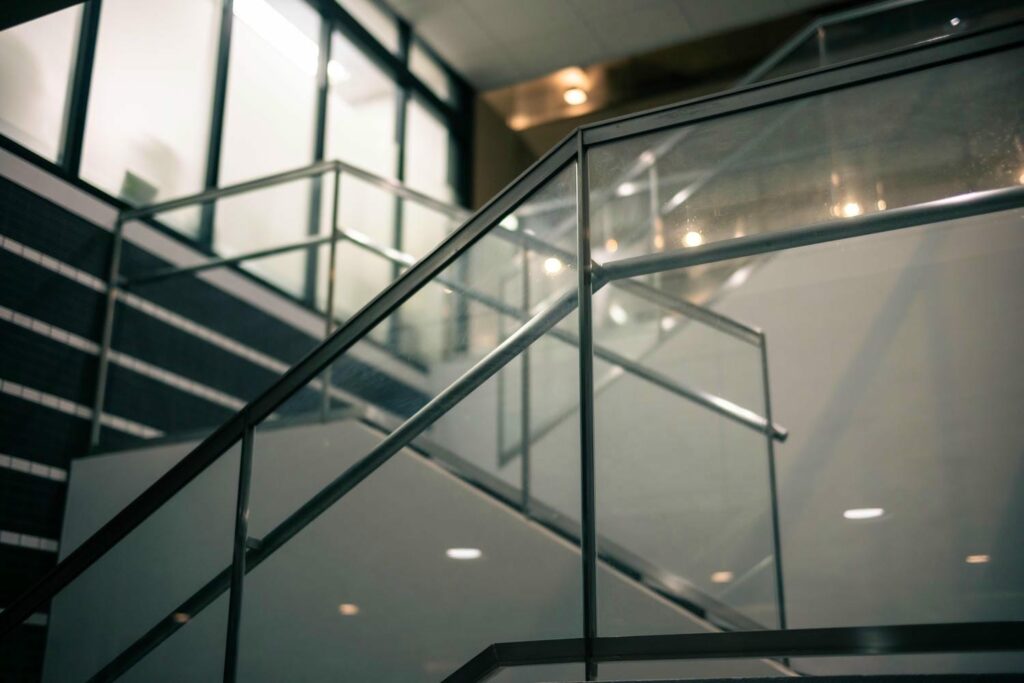
A stair railing has to do two jobs at once. It has to guard the open side of the stair, and it has to support safe stair use. When people talk about “glass stair railings,” they often focus on the first job and forget the second.
That is why safety planning on stairs should begin early, before the glass, hardware, and handrail are treated as separate decisions.
A Guard And A Handrail Do Different Jobs
The guard prevents falls off the open edge. The handrail supports balance and grip while using the stairs. On staircases, those are different functions even if they visually overlap.
This matters because many homeowners assume the glass is “the railing” in every sense. In practice, the glass may be the guard, but you still need a clear, usable handrail strategy for the stair condition.
Openings, Stair Geometry, And Everyday Grip Still Matter
Stairs are where geometry starts to work against you. The angle of the run, the landings, and the triangle conditions at the treads all make details more sensitive than they are on a flat edge. Add daily grip and movement, and the stair becomes the place where poor planning shows up first.
That is why good stair glass is not just about panel size or hardware finish. It is about controlling openings, maintaining a comfortable grip line, and making sure the system behaves well where people actually use it.
Ontario Code Considerations For Stair Glass
Ontario-specific guard and stair basics deserve their own conversation, and the indoor glass railing code requirements in Ontario cover them in detail.
Ontario publishes the current Building Code regulation on e-Laws, which is the right place to confirm the legal text when you need it.
Handrails Matter More Than People Think
Many staircase regrets are not about the glass. They are about the handrail. A stair can look clean in a photo and still feel wrong the first time you use it if the handrail is awkward, broken, or too bulky.
This is why handrails deserve their own design conversation instead of being treated as an afterthought.
Wall Rail, Cap, Or Integrated Grip Line
Most glass stair projects end up in one of three directions. A separate wall rail keeps the grip line independent from the glass. A top cap creates one continuous line on the glass. An integrated grip line tries to blend function and appearance into one cleaner gesture.
None of those choices is automatically right. The best option depends on the stair width, the room views, and how strongly you want the glass itself to dominate the look.
Continuity And Comfortable Grip Beat “Looks Minimal” Alone
A handrail that looks minimal but feels awkward is not a good staircase solution. Stairs are used in motion, which means continuity and comfort matter more than extreme visual reduction. Your hand should find the rail naturally, not search for it.
This is where many projects go wrong. The owner chases the lightest possible look, and the grip line becomes secondary. The better result is usually the one that feels calm and natural first, and minimal second.
Plan The Handrail Before The Glass Is Final
Late handrail decisions create bulky compromises. Once glass is cut, your flexibility drops fast. The cap may need to change, the transitions may need to grow, or the clean line you wanted may turn into an add-on.
The practical handrail options for indoor glass railings cover wall rails, caps, and integrated grip lines, and they are easier to evaluate before the stair design is locked in.
Hardware Choices That Shape The Look And Feel
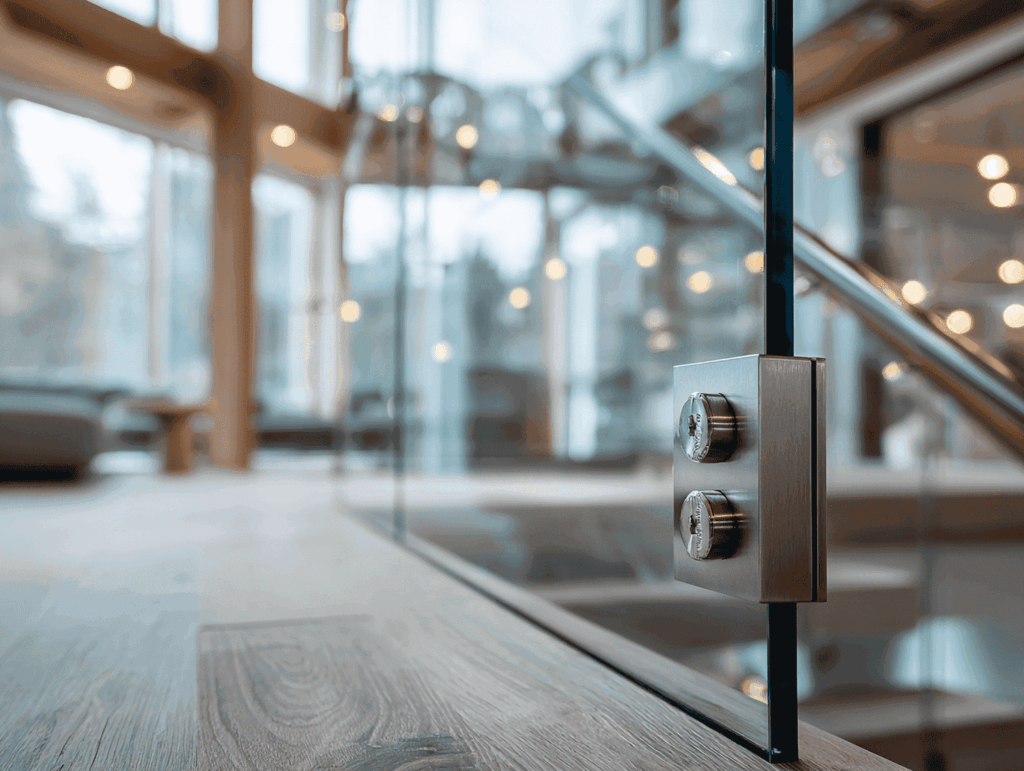
Glass is what people notice first, but hardware is what decides whether the staircase feels clean or fussy. It also plays a big role in how the system looks from across the room and how it behaves when used every day.
This is especially important on stairs because the mounting line runs through the whole visual sweep of the stair.
Base Shoe Or Channel Systems
Base-supported systems can create a very clean line, especially on stairs and landings where you want the glass to rise from a controlled edge detail. They often suit modern or low-visual-noise interiors because the support stays concentrated at the base.
The win here is simplicity of appearance. The risk is that if the base becomes too heavy or the edge conditions are not handled cleanly, the “minimal” look starts to feel more engineered than refined.
Side-Mounts, Point Supports, And Other Low-Profile Options
Side-mount and point-supported systems can keep the stair edge visually open, which is a strong advantage when the staircase sits inside the main room. They also create a more obviously custom look, which some homeowners love.
That said, fewer visible parts does not mean fewer design decisions. These systems depend heavily on good alignment, suitable structure, and a layout that keeps the supports from becoming visual distractions.
Why Hardware Changes The Way The Stair Feels
Hardware affects more than appearance. It changes how the guard reads from the room, how easy it is to clean, and how rigid or quiet the system feels in use. On stairs, those differences are more noticeable because the railing is used actively, not just looked at.
Different low-profile approaches to hardware for indoor glass railings read differently on stairs and landings, and the right choice depends on layout and view conditions.
Comparing Stair Glass Approaches At A Glance
The three approaches below differ most in how the hardware reads from the room, how forgiving they are to plan, and how they handle privacy.
| Approach | Best For | Watch-Out |
| Frameless Or Near-Frameless Stair Glass | Maximum openness and a quiet visual line | Higher pressure on planning, structure, and detail quality |
| Low-Profile Supported Stair Glass | Strong open feel with a bit more forgiveness | Slightly more visible hardware in room views |
| Glass Stair Railing With Selective Privacy Detail | Openness with softer sightlines where needed | Privacy treatments must be placed carefully or the stair looks patchy |
If openness is your top priority, glass remains the strongest fit. If comfort, privacy, or budget matter more, the smartest version may be a more forgiving system rather than the most extreme minimal look.
How To Plan A Glass Stair Railing In 5 Steps
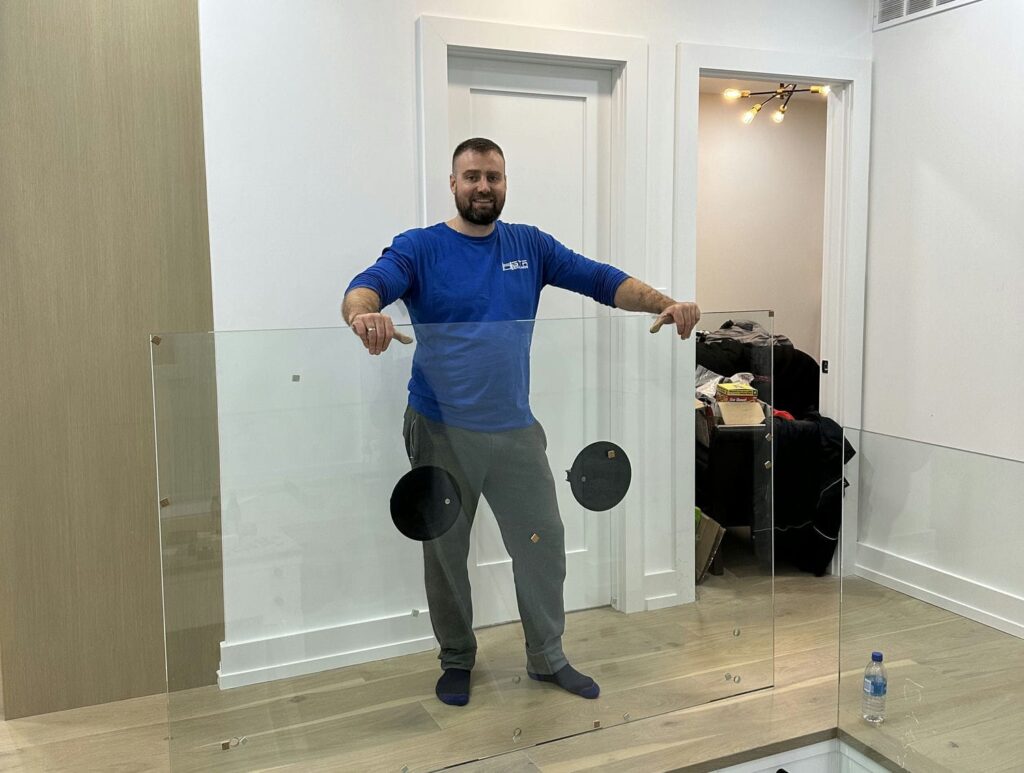
A good staircase decision starts with how the stair works in the room, not just how the railing looks on its own. These five steps keep the process practical.
Step 1: Map The Views And Drop Edges
Stand at the entry, the main living area, and the top landing. Ask which views make the staircase feel connected to the home, and which edges need guarding. Those are the sightlines and conditions the railing must respond to.
This step helps you understand whether the stair should visually disappear, or whether it can carry a bit more structure without hurting the room.
Step 2: Decide How Open The Stair Should Feel
Some homeowners want maximum openness. Others want openness with a little screening, especially if the stair overlooks a family room, office, or private space. Decide that early, because it affects glass finish, panel layout, and hardware direction.
If you skip this step, you usually end up defaulting to “all clear” and then trying to solve privacy later.
Step 3: Choose The Handrail Strategy Early
Your handrail decision affects comfort, safety, and appearance. It also affects how bulky or slim the final stair line feels. A staircase should not wait until the end for its grip line.
This step is the best protection against “beautiful but awkward” stairs.
Step 4: Match The Hardware To The Stair Geometry
The prettiest system on one staircase is not automatically the smartest system on another. Straight runs, turned stairs, top landings, and side conditions all change how the hardware reads and behaves.
That is why layout should lead hardware choice. Not the other way around.
Step 5: Compare Quotes By System, Not By Inspiration Photos
Compare the real ingredients: hardware approach, glass approach, handrail plan, and transition details. Do not compare only a rendering, a mood board, or the word “frameless.”
That is how you avoid buying a photo instead of a staircase.
Common Staircase Mistakes To Avoid
Most staircase mistakes are not dramatic engineering failures. They are layout, comfort, and sequencing mistakes that quietly make the finished stair feel less refined than it should. The good news is that they are avoidable when you know where to look.
Choosing The Look Before The Grip Line
Many homeowners choose the visual direction first and only later ask where the handrail goes. That works poorly on stairs, because the handrail is not a decorative accessory. It is a core part of how the stair feels to use.
If you solve the look first and the grip second, the handrail often ends up bulkier and less elegant than it needed to be.
Ignoring Top And Bottom Stair Transitions
The top and bottom of the stair are where “good enough” details become obvious. A clean mid-run does not rescue an awkward landing return or clumsy stair start. These zones need just as much attention as the centre panels.
This is also where many readers can protect themselves. Ask to see how the stair starts and stops, not just the middle of the run.
Assuming Glass Solves Every Safety Problem By Itself
Glass can help create a continuous guard and a visually open stair, but it does not replace thoughtful handrail planning or good detailing. A staircase still has to work as a staircase, not just as a clean visual feature.
The best glass stair railings are planned as complete stair systems, not as decorative panels.
Plan The Stair As A System, Not Just A Surface
Indoor glass stair railings work best when the staircase is planned as one system, not when glass is treated like a last-minute finish. GTA Railings brings over 15 years in business, railings made in Canada, a certified and insured team, and a 2-year warranty on all materials and workmanship. If you want a stair that looks clean, feels right, and fits the room, start with our indoor glass railings service page.
Frequently Asked Questions
Yes, when the full staircase system is planned correctly. Safety comes from the guard, the handrail strategy, the mounting method, and the stair layout working together.
Often, yes. A glass guard and a stair handrail do different jobs, and many stair conditions still need a real grip line.
Straight runs, open-to-below stairs, and staircases exposed to the main room often benefit most because glass preserves light and sightlines better than heavier guard styles.
Not always. Frameless usually looks cleaner, but supported low-profile systems can be smarter where budget, structure, or comfort matter more.
Often, yes. Glass reduces visual blockage, which can make a tighter staircase feel lighter and less boxed in.
They are easy to wipe, but fingerprints and smudges are more visible than on heavier railing styles. A good handrail plan helps reduce glass-touching.
At a high level, the biggest issues are guard performance, stair geometry, opening control, and a real handrail strategy.